
Concrete or Prefabricated Composite Pool?
Comparing a cast concrete pool with a prefabricated composite shell: design freedom, installation time, ground conditions, surface, repairability and upkeep.
The first big decision for anyone planning a garden pool is the type of construction. The two most often compared options are a cast-in-place concrete pool and a composite, or fibreglass, shell made in a factory and delivered ready to install. Both can last many years when built well. The difference lies in which conditions and wishes each suits better.
How they are built
A concrete pool is built on site from reinforced concrete. The shell is cast in formwork or formed with sprayed concrete, then waterproofed and finished. Its shape, size and depth are limited only by the design.
A composite pool is a one-piece shell made in a factory from glass fibre and resin over a mould. Its inner surface already has a decorative, watertight layer. On site, the shell is lowered into a prepared excavation, the pipes are connected and the surroundings are backfilled.
Freedom of shape and size
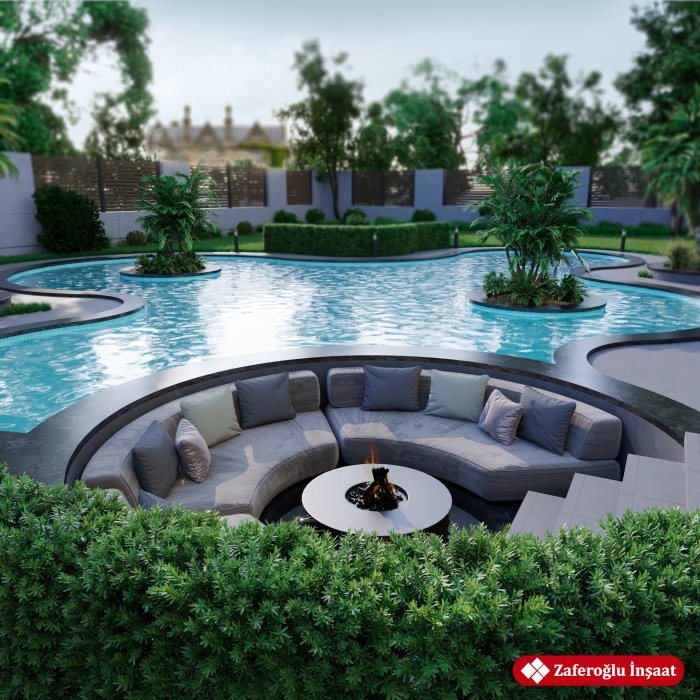
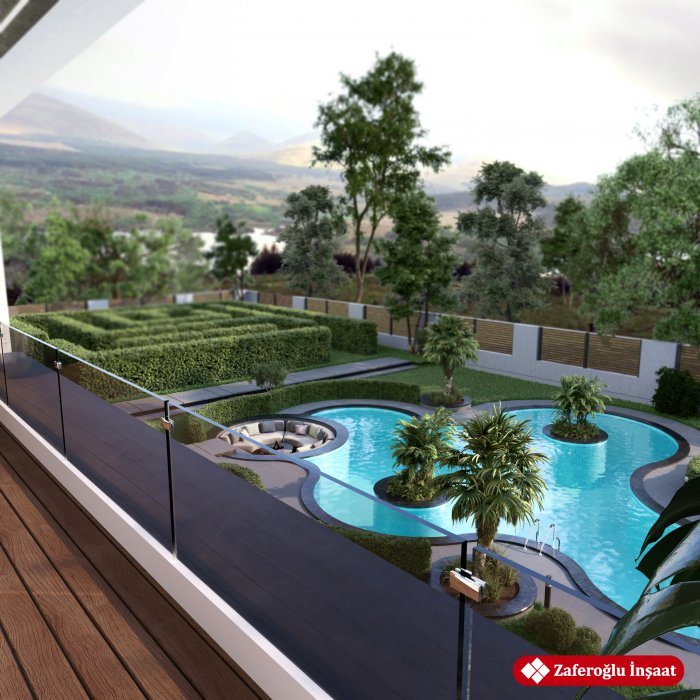
The main advantage of concrete is freedom. A free-form outline, a long lap lane, an overflow edge, a sunken seating area, wide steps, an in-pool bench or a configuration that matches the house’s architecture can all be achieved in concrete.
Composite pools are limited to the models in a manufacturer’s range. Some manufacturers offer options such as colour, step position or an extra seat, but the basic shape stays the same. A more important limit is transport: the shell travels by road in one piece, so its width and length cannot exceed what fits on a lorry and passes along the roads. Crane delivery into the garden must also be checked in advance, as a narrow street or a high wall can complicate installation.
Installation time and weather
Speed is the strong point of a composite pool. Once the excavation is ready, placing the shell and backfilling are completed in a relatively short time, with few wet processes. This shortens the period during which the garden is a building site.
A concrete pool takes longer: formwork, reinforcement, concrete, curing, water testing, waterproofing and finishing happen in sequence. Cold or very hot weather requires extra measures for concrete and tiling. The duration depends on the specific project and conditions, so only a contractor’s programme can give a real figure.
Soil and groundwater
On sites with high groundwater, a composite pool needs particular care. Groundwater can push an empty or half-empty lightweight shell upwards. This risk is managed with proper drainage, anchoring and following the rules for draining the pool, but it must be taken into account.
A concrete pool is a heavy, solid structure and can be designed for difficult ground. Even so, groundwater and ground movement must be included in the calculations, and waterproofing should be considered from the inside and, where necessary, the outside.
Surface, maintenance and lifespan
The smooth surface of a composite shell is less prone to holding algae and deposits and is easy to clean. The colour can be chosen, but rich textures such as mosaic or stone are limited. Coping stones and surround paving can be chosen freely for both types, so much of the overall look is actually set by the surround. After many years, the surface layer can age under sun and chemicals, and restoring it is specialist work.
A concrete pool offers a wide choice of finishes: mosaic, tiles, a liner or natural stone. When the finish wears or you want a new look, it can be renewed while the structure stays. In return, the condition of grout joints and waterproofing needs periodic checks.
The choice: when each makes sense
A composite pool is a good choice if a standard size and shape are acceptable, delivery to the garden is feasible and quick installation is a priority. A concrete pool wins when you need a custom shape, a large size, an overflow system, close integration with the house or have difficult site conditions.
Before deciding, answer these questions:
- Is the shape and size you want available among catalogue models?
- Is there road access and a crane position to deliver the shell?
- Is the groundwater level known?
- How important is the type of finish to you?
- How will future repairs and renewal be carried out?
Zaferoğlu İnşaat is active in construction and architectural design and develops garden solutions with sketches and computer models. Check whether a large lorry can get onto your site; whether a composite shell is possible often comes down to that.
News