
Types of Decorative Plaster: Venetian, Microcement, Textured
Venetian plaster, microcement and textured finishes differ in look, durability and the skill they demand from the applicator. How to compare them.
Paint gives a wall colour; decorative plaster gives it depth and touch. The same white is a quiet background in flat paint and a lively, shifting surface in lime plaster that still shows the trowel. That is why decorative plaster is often chosen for special zones — a feature wall, the area around a fireplace or a hallway.
Venetian plaster: depth and sheen
Venetian plaster is traditionally made from slaked lime and marble powder; modern versions also use acrylic binders. It is applied in very thin coats with a steel trowel, and each coat is compressed and burnished. The result is a surface with a marble-like depth and a soft sheen.
This technique depends heavily on the applicator’s skill. With the same material one craftsman achieves a deep, even surface, another a patchy, streaky one. That is why it makes sense to prepare a sample board before starting: the shade, level of sheen and character of the pattern are agreed on it.
Venetian plaster needs a substrate as smooth as a finishing skim coat, because the thin layers reproduce every flaw beneath them. A protective wax is often applied on top to make the surface more resistant to moisture and stains.
Microcement: seamless and minimal
Microcement is a thin-layer finish based on cement, polymers and fine fillers. Its advantage is that it is seamless: walls, floors, stairs and even kitchen surfaces can be covered in one continuous material. That makes it popular in minimalist and loft-style interiors.
Microcement works as a system: primer, sometimes a reinforcing mesh, several thin coats and a protective sealer at the end. If it is used in wet areas such as a shower wall, the system manufacturer’s waterproofing requirements must be followed in full. The sealer plays the main role in how well microcement resists stains and water.
The substrate for microcement must be stable. On a base that moves — plasterboard that has not been fixed properly, or a cracking screed — the finish can crack as well.
Textured plasters: hiding and emphasising
This group includes grainy plasters such as “bark beetle” and scratch finishes, as well as relief coatings patterned with a brush or roller. Compared with Venetian plaster, they hide small surface defects better and are a little more forgiving of the applicator’s mistakes.
Textured plasters are used in commercial spaces, corridors and sometimes on façades. Indoors they have one drawback: dust collects on a relief surface, and wiping it clean is harder than on a smooth one.
Where it works and where it causes trouble
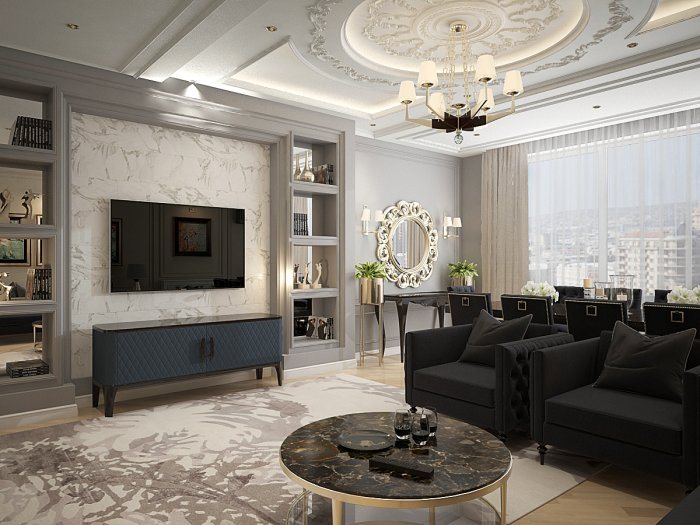
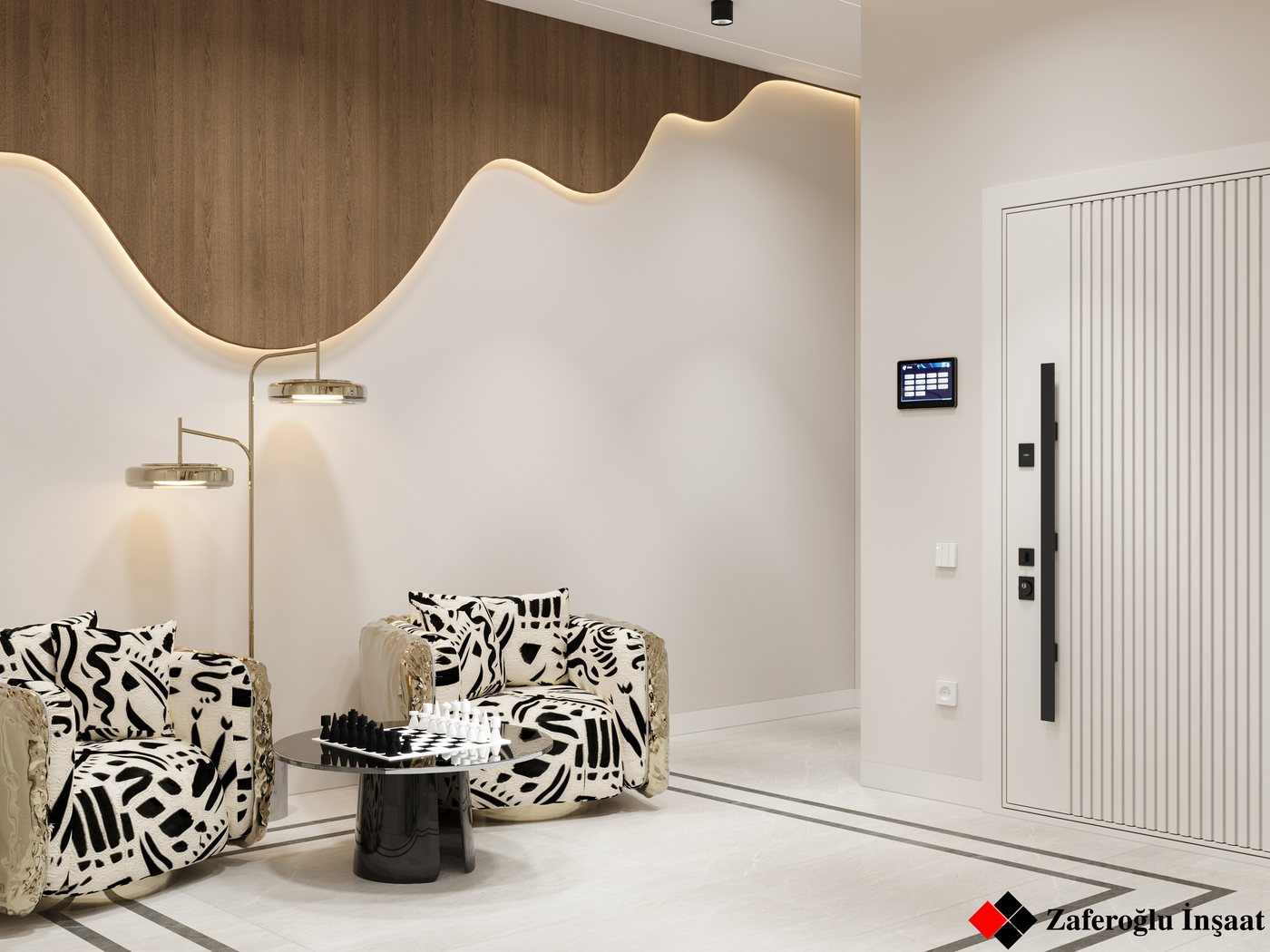
Decorative plaster does not suit every wall. Its strength is the way it plays with light, so it is most effective on walls that catch soft side lighting — for example beneath a line of light running along the wall. Applying it to a wall that will be completely covered by furniture and shelving usually makes little sense.
In a small room, covering every wall in glossy Venetian plaster can make the space feel heavy. Choosing one feature surface and keeping the rest in calm paint tends to give a more balanced result. With microcement it is often the opposite: covering floor and walls in one material can make a small bathroom feel more unified.
Care is also needed in areas that get touched a lot. Around switches and sockets, beside doors and on a wall where an armchair rests, the finish will burnish or mark over time. Choosing the right protective layer, or planning where the finish stops, reduces problems later.
Pay attention to the order of electrical and plumbing work as well. Cutting a new cable run into a wall once decorative plaster is finished means damage that is very hard to repair invisibly.
Criteria for comparison
- Look: Venetian plaster is deep and lustrous; microcement is seamless, from matt to low sheen; textured plaster is in relief.
- Substrate requirements: Venetian plaster and microcement need a very smooth, stable base; textured plaster is more tolerant.
- Wet areas: only with a system and protective layer approved by the manufacturer for that purpose.
- Repairs: invisible patch repairs are difficult on Venetian plaster and microcement, relatively easier on textured surfaces.
- Maintenance: the protective wax or sealer may need periodic renewal.
Questions to ask before ordering
The name of the material and system, the number of coats, the type of protective finish, a sample board and care instructions should all be agreed in writing. Check the sample in daylight and under artificial light: lustrous surfaces look different under lamps.
In its design projects Zaferoğlu İnşaat uses computer models to show in advance where a decorative finish will go and how it will be lit. If you would like to discuss options for a feature wall, please contact us.
News