
Choosing Wall Paint: Matt, Satin and Washable Finishes
A paint’s sheen affects both how a wall looks and how easy it is to maintain. Where matt makes sense, and where satin or washable paint is the better choice.
With a colour chart open in front of you, the decision looks like it is only about shade. Yet the same colour produces two different walls in matt and in satin: one scatters light, the other reflects it. Sheen also decides how a wall reacts to marks, cleaning and surface imperfections.
What sheen changes
Matt paint scatters light in many directions. The colour looks deep and soft, and small ripples or transitions in the filler are much less noticeable. Satin paint has a gentle sheen: the colour looks slightly livelier, but under raking light every flaw in the surface stands out.
As sheen increases, the paint film is usually denser and dirt has a harder time getting into it. That is why satin and gloss finishes have traditionally been easier to clean. In modern products the rule is not absolute, though: some matt paints are also made with high scrub resistance.
What “washable” actually means
Washable is not a level of sheen but a property. In practice this means you can wipe the wall with a damp cloth and gentle detergent without fading it or polishing a glossy spot into it. On the label it is often given as a wet scrub resistance class. In the European classification (EN 13300), the lower the class number, the more scrub-resistant the paint.
In everyday life this looks like bag marks in the hallway, pencil lines in a child’s room or a splash of oil in the kitchen. Washable paint lets you wipe these away, whereas ordinary interior paint may leave a pale patch or a shiny streak when cleaned.
Choosing by room
The choice for a given room comes down to three questions: how often the wall is touched, how the light falls on it and how smooth the surface is.
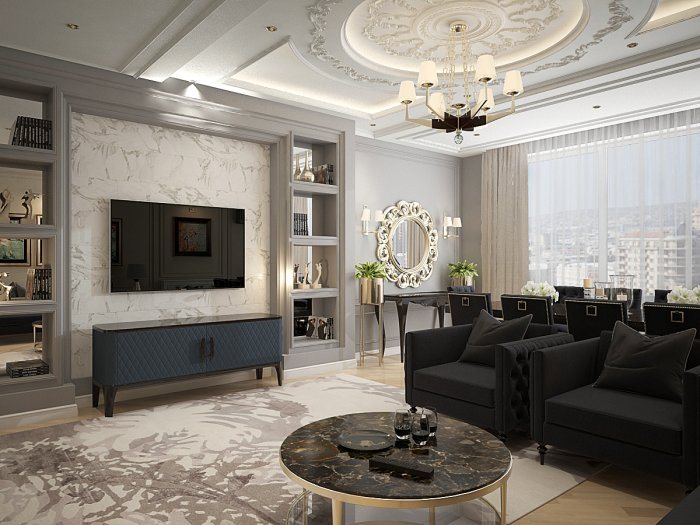
- Bedroom and living room: matt or very low sheen for a calm look that does not tire the eye. With children or pets, choose a matt paint with good scrub resistance.
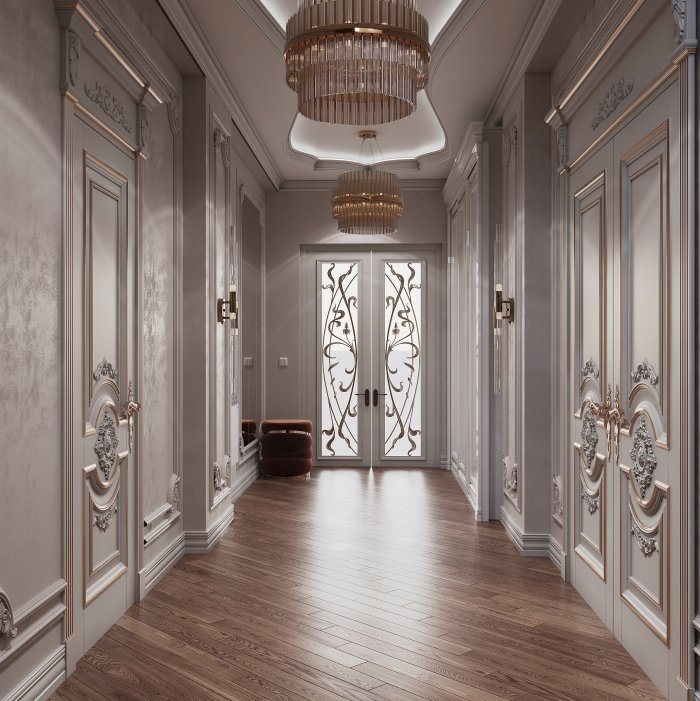
- Hallway and staircase: high scrub resistance, since these walls get touched most.
- Children’s room: washable, low-odour water-based paint.
- Kitchen: an easy-to-clean finish that copes with grease and steam; the splashback itself needs a separate material.
- Bathroom: paint designed for wet rooms, with anti-mould additives, combined with good ventilation.
- Ceiling: in most cases a deep matt, because a ceiling is a large surface that often catches light at a low angle.
How surface preparation affects the choice
Be honest about the condition of the wall when choosing paint. On a wall in an older building that has not been fully levelled, satin paint will highlight every wave. In that case either spend more time on the finishing coat or go for a matt finish.
Colour plays a part too. Dark, saturated shades in matt can show touch marks more readily, because rubbed areas become slightly polished. This is especially noticeable in narrow corridors and around doors.
Number of coats, rollers and quantities
The final look depends not only on the product but on how it is applied. For most interior paints two coats are standard: the first evens out colour and absorption, the second gives the final tone and sheen. When switching from light to dark or the other way round, or with saturated shades, a third coat may be needed.
The roller nap is matched to the surface. A short-nap roller leaves a finer texture on a smooth wall, while a long-nap roller fills the hollows of a textured surface. Satin paint should be finished on one wall without stopping, from corner to corner, because going back over an edge that has started to dry leaves a shiny band.
When working out quantities, consider the coverage on the label against the real wall area, the number of coats and how absorbent the surface is. Since the same colour bought separately later can differ slightly in tone, it is safer to buy paint for the whole job in one go with a small reserve.
What to look for on the label
- intended use: interior, wet rooms, ceilings;
- scrub resistance class;
- sheen level;
- coverage and recommended number of coats;
- recommended primer;
- information on volatile organic compounds and odour.
Before painting a large area, test a small patch and compare it in daylight and evening light: a small sample in a catalogue can look quite different on a real wall.
In its design projects Zaferoğlu İnşaat helps choose wall colours and finishes as part of the overall combination of materials. List which rooms get the most wear and moisture, and we can match matt or washable paint to each.
News