
Boundary Walls and Fences: Stone, Metal or Combined
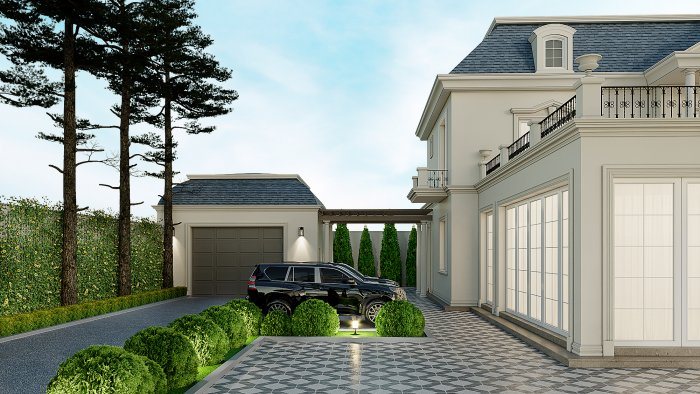
A fence defines a plot's boundary, privacy and the first impression of the house. Stone, metal and combined fences need different foundations, wind-load thinking and care.
A fence is the first part of a house seen from the street, and it is often built before the house itself. A fence chosen in a hurry cracks, leans or clashes with the architecture a few years later. To choose well, decide what you expect from it: full privacy, security, protection from noise and dust, or simply marking the boundary. Each function calls for different materials and construction.
Stone and masonry walls
A wall built of natural stone, brick or blocks is strong, long-lasting and fully solid. It blocks views from the street, holds back some noise and dust and suits classic and Mediterranean-style houses well. A block wall can be finished with render, stone cladding or decorative tiles.
The weight of these walls calls for a proper foundation. A strip footing is usually cast, its depth set by soil type and wall height. On long walls, movement joints are placed at intervals so cracks do not form from temperature and ground movement. A tall solid wall presents a large surface to the wind, so it is reinforced with piers and a reinforced concrete ring beam.
The top of a masonry wall must be protected from rain. Stone or metal copings stop water soaking into the wall, prevent frost damage to the stone and reduce salt staining on the surface.
Metal fences
Metal fences come in a wide range: classic railings with wrought elements, modern slatted panels made of rectangular tubes, welded mesh panels, and perforated or laser-cut patterned sheets.
Their advantages are lightness, fast installation and design flexibility. Depending on the gap between slats, slatted panels can let air through while greatly limiting views from the street. Open railings show off the garden to the street and give no privacy, but do not block airflow or light.
Corrosion is metal's main enemy. Galvanised steel with a powder coat on top provides long-term protection. Welds, cut edges and fixing points need particular attention, since rust usually starts there. Near the sea, aluminium can be a more durable option.
A fully solid metal sheet fence, such as profiled sheeting, is cheap and quick but takes a heavy load in strong winds, heats up in the sun and often cheapens the look of the house.
Combined fences
The most common solution combines stone and metal: a masonry plinth, stone or rendered piers at intervals, and metal panels between them. The plinth protects the lower part exposed to rain and soil, the piers strengthen the structure, and the metal panels lighten the fence and allow design freedom.
In a combination, proportions should follow the house facade: the plinth and piers match the facade stone or render colour, while the metal colour matches window frames and gates. Timber slats, gabions (metal baskets filled with stone) and glass panels can also be part of a combined fence.
Height, neighbours and rules
Fence height and its appearance on the street side are sometimes limited by local building rules, residential complex requirements or agreement with neighbours. A tall solid wall that shades the neighbouring plot can cause disputes. Establishing the exact boundary and clarifying these issues before building prevents later problems.
Drainage and underground services
A solid fence can cut off the natural flow of rainwater. On a sloping site, water openings or a drainage line should be provided at the bottom of the fence; otherwise water collects along it and washes out the foundation.
Cables for gate automation, intercom, street lights and cameras are run in protective ducts before the fence foundation is poured. Drilling through a finished fence later damages both its look and its structure.
Checklist for choosing
- What is the main expectation: privacy, security, noise or boundary marking?
- Does the fence suit the architectural style and materials of the house?
- Has the foundation been designed for the soil type and the weight of the fence?
- On a long fence, have movement joints and wind load been considered?
- How will metal elements be protected from corrosion?
- Have water openings and cable ducts been planned?
Zaferoğlu İnşaat designs and builds yard works for private houses and villas, including fences and entrances, together with the facade design of the house. Say whether privacy or security matters more, and we can test fence materials and heights in a model with that aim.
News