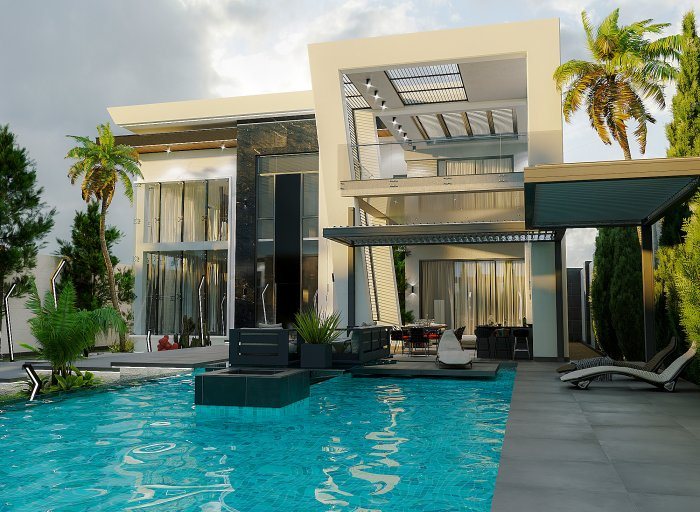

Pool Surrounds: Non-Slip Stone, Tile and Decking
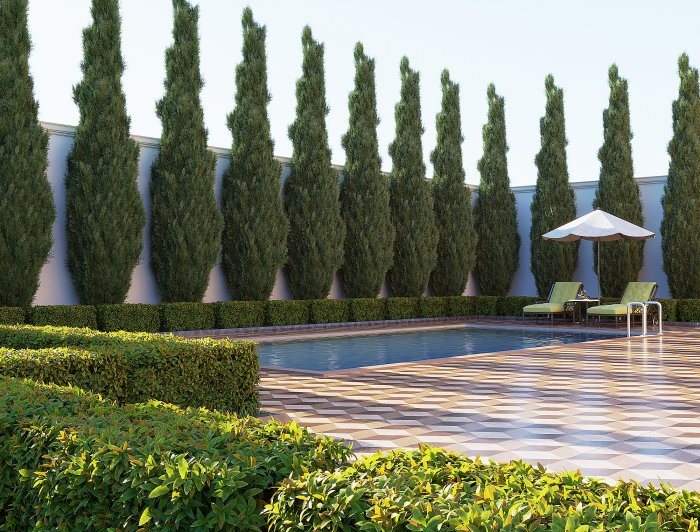
Natural stone, porcelain, concrete pavers and decking for pool surrounds compared for slip resistance, heat, water and chemical resistance, drainage and care.
Around a pool, people walk barefoot, wet and often in a hurry. Children run, water splashes, the sun heats the surface and chlorinated or salty water spills onto it. That makes pool surround paving a more demanding choice than an ordinary garden path. The wrong material is slippery, burns feet or stains and breaks up within a few seasons.
Key requirements
A pool surround material should pass the following tests:
- it is not slippery when wet and walked on barefoot;
- it does not get hot enough in the sun to burn feet;
- it resists chlorine, salt and cleaning products;
- it has low water absorption and withstands frost;
- it is pleasant underfoot, without sharp edges or harsh texture;
- it is easy to clean and repair.
For slip resistance, manufacturers state a slip rating for the surface. Choose a rating intended for wet barefoot areas. A very coarse surface is not good either, though: it grazes feet and does not release dirt easily.
Natural stone
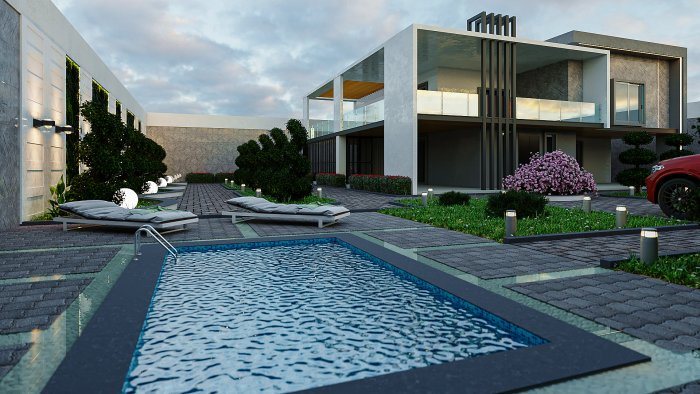
Travertine, limestone, granite and some sandstones are widely used around pools. Natural stone brings beautiful texture, blends with the landscape and lasts a long time when properly finished.
The type of stone matters. Light travertine and limestone stay relatively cool in the sun but are porous and may need regular sealing. In pools with salt disinfection, some softer stones can deteriorate over time, so salt resistance is checked beforehand. Polished glossy stone is unsuitable for a pool surround; the surface should be brushed, sandblasted or tumbled. Dark granite gets very hot in the sun.
Porcelain and concrete pavers
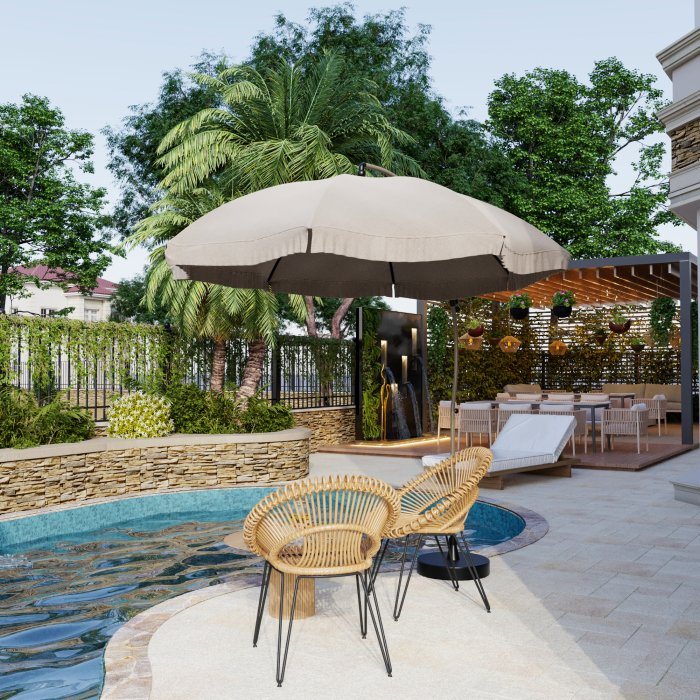
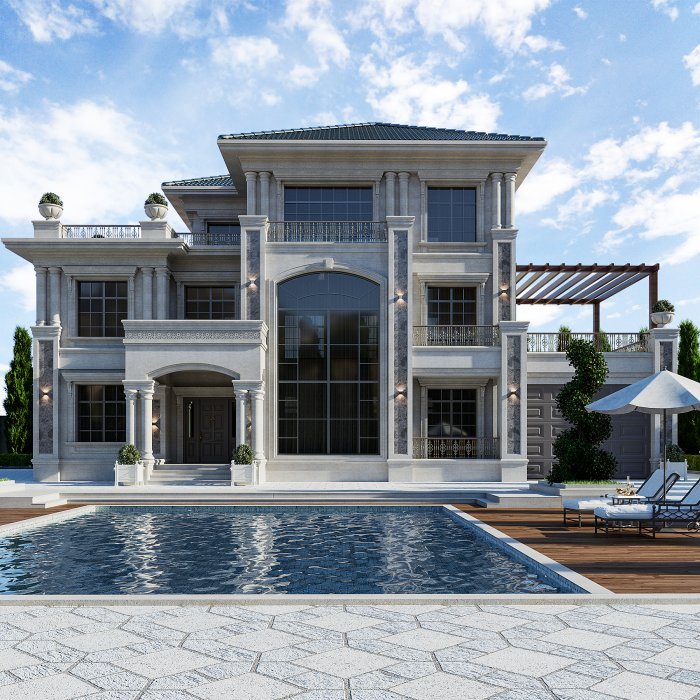
Porcelain pavers made for outdoor use are thicker than indoor tiles, take up almost no water, shrug off stains and frost, and are available in many finishes. Some ranges imitate stone or wood convincingly, and choosing tiles for both the pool and the surround from the same range creates a unified look.
Concrete pavers or decorative concrete can be a more economical and flexible option. A slip-resistant finish, UV-stable colour and regular protective sealing are important. Movement joints must be planned properly to prevent cracking in concrete surfaces.
Decking: timber and composite
Timber decking feels warm and soft underfoot, heats up differently from stone in the sun and gives the surround a natural look. Dense, water-resistant timber species or thermally modified wood are chosen. Timber needs regular oiling or a protective finish; otherwise it turns grey and can crack and splinter.
Composite decking is made from wood flour and polymers. It is easier to maintain, does not splinter and keeps its colour longer. However, dark composite boards get very hot in strong sun, so lighter shades are more practical around a pool. With both types, space for ventilation and drainage must be left under the boards.
Coping, falls and drainage
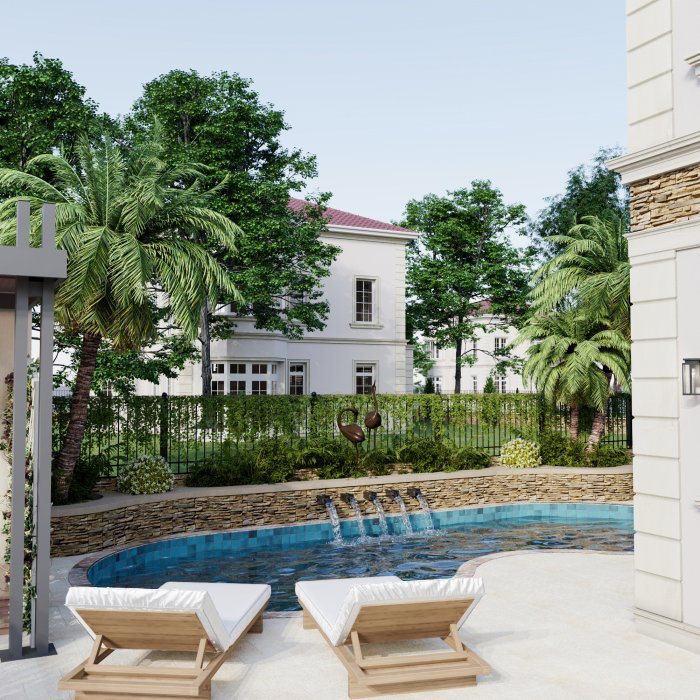
The stone right at the pool edge is a separate element. It should have a rounded or bevelled edge so it does not hurt feet or hands when getting in and out. The waterproofing beneath the coping and its connection to the pool structure are carefully detailed.
The paving is laid with a slight fall away from the pool, so dirty rainwater and cleaning water flow into a drainage channel or planting rather than into the pool. In overflow pools this logic is designed together with the channel system. The grout or jointing material between pavers must also resist water, frost and chemicals.
Checklist
- The material has a slip rating suitable for wet barefoot use.
- A light colour has been chosen so it does not overheat in the sun.
- Resistance of stone and grout to chlorine and salt has been checked.
- The coping edges are rounded.
- Falls direct water away from the pool.
- There is a ventilation gap beneath decking.
In garden and terrace solutions, Zaferoğlu İnşaat shows combinations of materials and colours in the design project. Contact us if you would like help choosing a slip-resistant surround.
News