
Pool Safety for Children: Fencing, Covers and Depth Zones
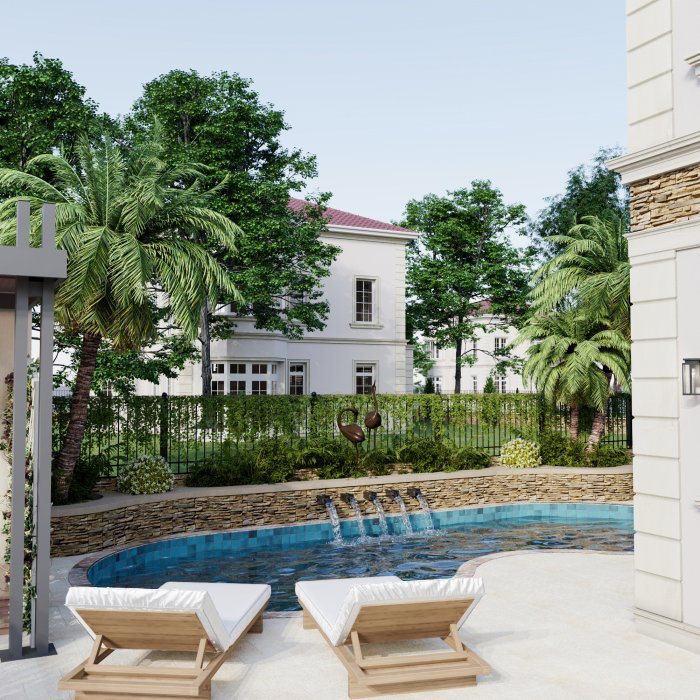
Layers of protection for children around a garden pool: supervision, fencing with self-closing gates, safety covers, depth zones, non-slip surfaces and alarms.
For a family with children, a garden pool is a source of great joy, but it also carries serious risk. A young child can slip into the water quietly and very quickly, often without making a sound. That is why pool safety never relies on a single measure. Specialists talk about several complementary layers of protection: if one fails, another still reduces the risk.
Layer one: adult supervision
No fence, cover or alarm replaces constant, attentive watching by an adult while a child is in the water. When children are in the pool, naming one adult as the “water watcher”, who is not on the phone or busy with anything else at that time, is a simple but decisive rule.
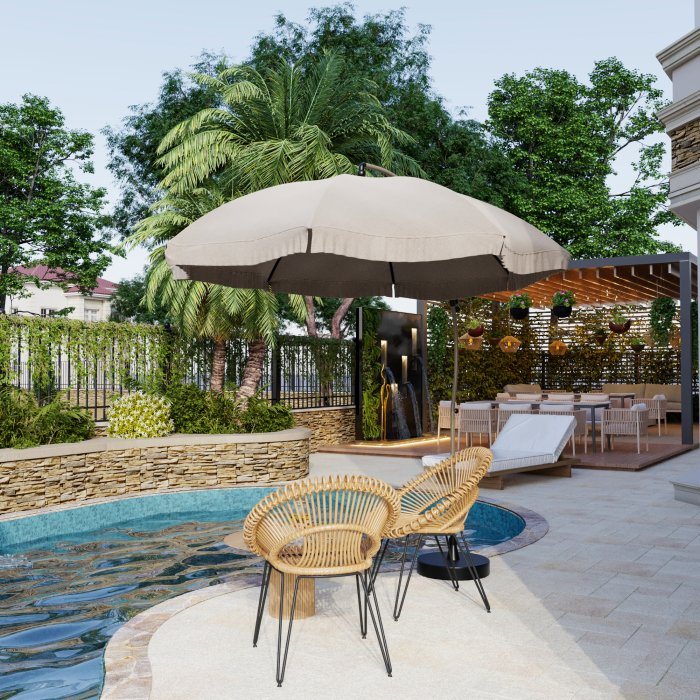
Design can make supervision easier. A pool visible from the kitchen and living room, a shaded seating area for adults facing the pool, and lighting that clearly shows the water surface and surround at night are planned at the design stage.
Layer two: fencing and a self-closing gate
A fence around the pool is the main physical barrier that stops a child reaching the water without adults knowing. To be effective it must meet several conditions:
- it must be high enough that a child cannot climb over;
- it must have no horizontal rails or details that act as climbing steps;
- gaps between vertical elements must not allow a child’s head through;
- chairs, boxes or plant pots must not be placed next to it;
- the gate must close by itself, with the latch at a height children cannot reach.
For specific heights and gap sizes, refer to local safety standards and manufacturer requirements. Glass panel fences keep the view open and make supervision easier, but must be made of safety glass. There should also be no gap where the fence meets the house wall.
Layer three: a safety cover
A cover on an unused pool keeps debris out and heat in, and it adds a layer of protection. But not every cover is a safety cover. A lightweight thermal cover or floating sheet will not hold a child; on the contrary, a child can slip underneath it.
Covers designed for safety are firmly anchored at the edges or consist of rigid slats running on rails, and they can bear a certain load. Rainwater collecting on top of a cover is also a hazard for children, so its drainage and regular clearing need attention. A cover only protects when it is fully closed and locked.
Depth zones and in-pool details
The internal layout of the pool also affects safety. A separate shallow zone or children’s pool and a gradual slope rather than a sudden step from shallow to deep reduce risk. Depths are clearly marked on the edge or the finish, and a float line can separate shallow and deep areas.
Other important details:
- steps and benches have non-slip surfaces, with step edges marked in a contrasting colour;
- main drains and suction points have special covers that prevent hair, fingers or the body being held by suction;
- the surround paving is not slippery when wet;
- a lifebuoy and a long reaching pole are kept in a visible place beside the pool.
Layer four: alarms and habits
A gate alarm, sensors that detect an object or waves in the water and wristband devices worn by children can add an extra warning layer. They are useful but do not replace the measures above.
One of the most effective long-term measures is teaching children to swim and learn water rules early, and for adults to have first-aid skills. Removing toys from the water after use also matters, as they tempt children to approach the pool.
Checklist
- The pool can be seen from the main living areas of the house.
- The fence cannot be climbed and the gate closes by itself.
- The cover is designed for safety and can be locked.
- Depth zones are marked and the transition is gradual.
- Drain covers are safe against suction entrapment.
- Rescue equipment is kept next to the pool.
Zaferoğlu İnşaat designs garden and pool surround solutions around a family’s real patterns of use. Contact us to talk about planning a safe pool area.
News