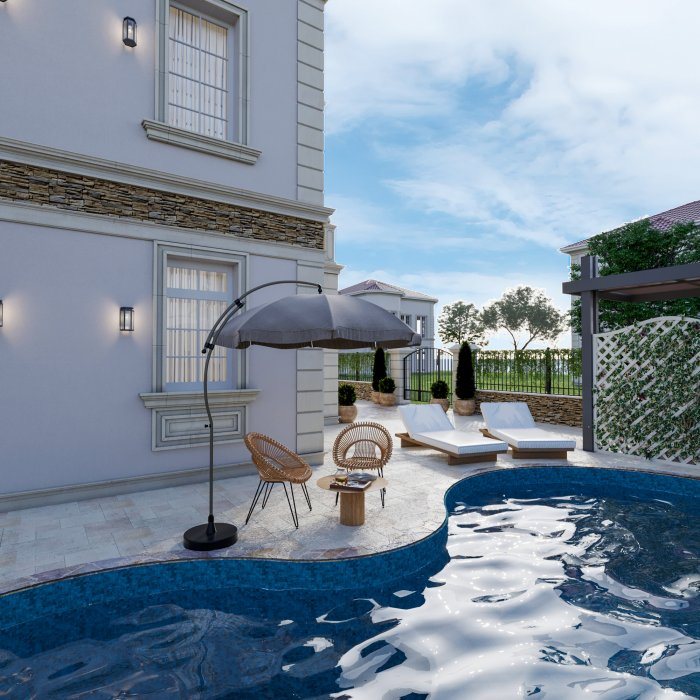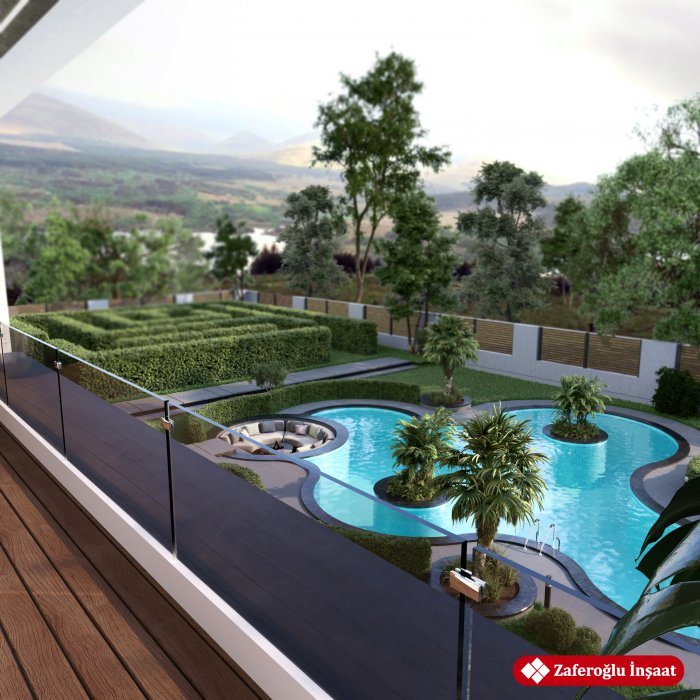

Poolside Lounge Areas: Shade, Seating and Circulation
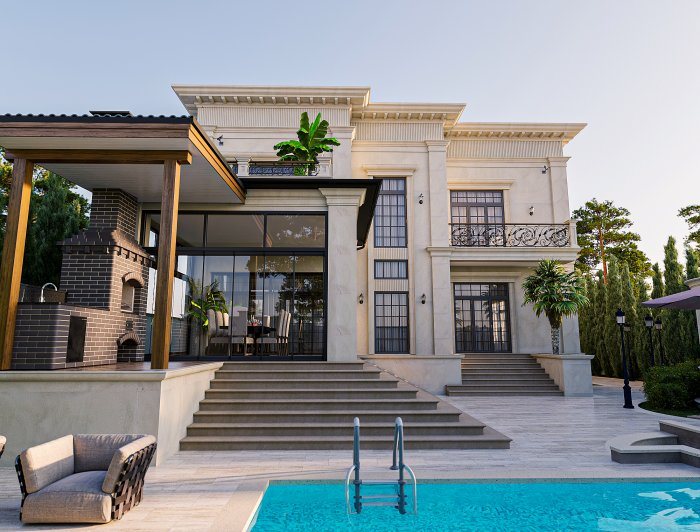
A poolside lounge planned around sun, shade and wet-foot movement gets used all day. Loungers and canopies placed in the wrong spot simply stand empty.
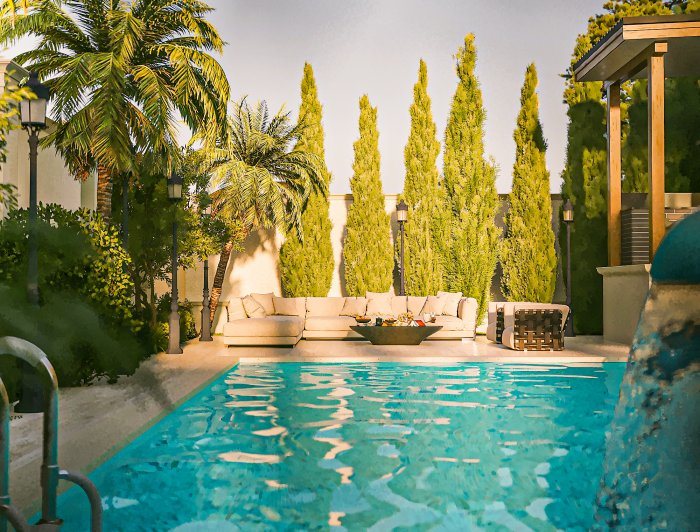
In many gardens the area around the pool looks lovely, yet at midday nobody can sit there: the paving is hot, there is no shade, there is nowhere to put a towel and wet feet make the whole route to the house slippery. A poolside lounge is not just a few sunloungers; it is a small space arranged around the path of the sun, the way people move and where water splashes.
The path of the sun and shade
Planning starts with the sun pattern on the plot. An area that gets sun in the morning and evening serves a different purpose from one that stays shaded during the hottest part of the day. Loungers for sunbathing go in the open, while tables and sofas for sitting and talking go in the shade.
Shade can be created in several ways:
- a fixed canopy or pergola: reliable for the whole season but needs a form that suits the house's architecture;
- an adjustable louvred pergola: opens and closes with the sun angle and can also keep off rain;
- tensioned shade sails: light and expressive, but the posts must be designed for wind loads;
- trees: natural shade, but leaves and fruit constantly load the pool filter, so they are planted a little way back rather than right at the edge.
Space for seating and furniture
A lounger takes up more than its own footprint. It needs extra room to recline, a small side table and space to walk behind it. The plan should leave comfortable movement around each lounger, and the walkway should pass beside the loungers rather than between them.
For outdoor furniture, resistance to sun, chlorinated water and moisture is decisive. Dark metal surfaces get very hot in the sun, and cushions with quick-drying, removable covers are practical. Where cushions will be stored at the end of the season should also be considered in advance.
Paving and drainage
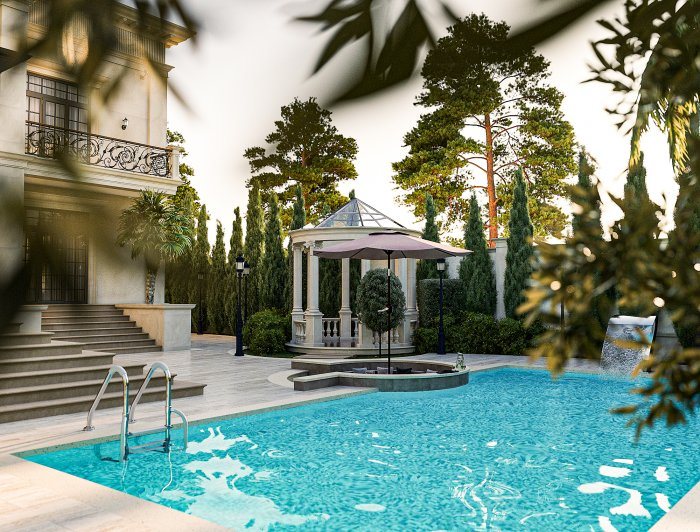
Paving around a pool must not be slippery under wet feet or become too hot in the sun. Light-coloured natural stone with a textured finish, purpose-made pool tiles and decking are common choices here. The paving should fall away from the pool towards a drainage line so that dirty rainwater does not run into the water.
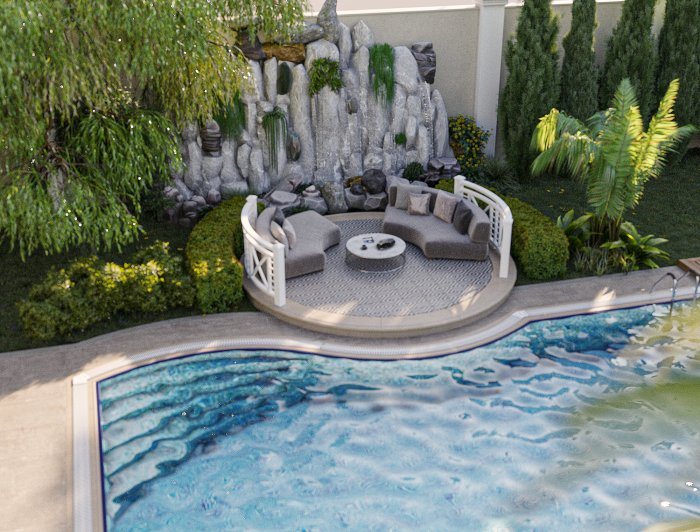
It helps to keep a clear distinction between the lounge area and the pool edge: sometimes a change of material, sometimes a single step in level. Such a separation keeps splashes away from upholstered furniture.
If decking is chosen, board direction and gap width also need thought. Boards laid along the direction of movement are more comfortable underfoot, and the gaps let water drain quickly. With stone and tiles, joint width and grout must withstand chlorinated water. A stone coping right at the pool edge serves as a handhold and also slows water running towards the lounge area.
Getting to the house and the pool
The route from the pool to the house should be as short as possible and lead not straight onto the living room rug but to an intermediate area for towels and showering. An outdoor shower, a foot rinse and a towel rack look like small details, but they keep sand and water out of the house. For evening use, low, glare-free lights along the path should mark steps and edges.
Outdoor kitchen, bar and service points
A small bar, fridge or barbecue is often added to the lounge area. Power, water and drainage for these must be run before the paving is laid. Sockets in wet areas have covers and residual current protection and are placed at a safe distance from the pool edge. Barbecue smoke and hot coals should be directed away from loungers and the pool, taking the prevailing wind into account.
Quick checklist
- How many people can sit in the shade during the hottest hours?
- Is there comfortable space to walk behind and beside the loungers?
- Is the paving slippery when wet, and how hot does it get in the sun?
- Does rainwater run into drains rather than the pool?
- Is there a shower and towel spot on the way to the house?
- Are steps and edges lit in the evening?
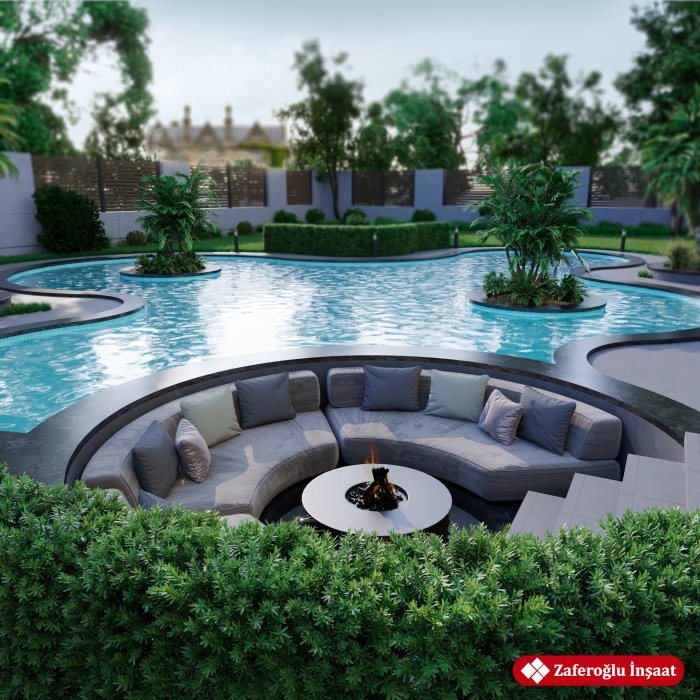
In its villa projects, Zaferoğlu İnşaat shows the pool, terrace and lounge areas together with the house plan on computer models. Tell us how you would like to spend a hot afternoon by the pool, and we can place shade, seating and paths around that.
News