
Waterfalls and Cascades in Pools: Design and Technical Needs

Waterfalls and cascades add sound and movement to a pool, but they need a dedicated pump, correctly sized flow and splash-resistant finishes. They are hard to add later, so plan them at design stage.
The sound of water softens city noise in a garden, brings movement to the pool surface and, with evening lighting, creates a strong visual effect. That is why waterfalls and cascades are often requested in villa projects. But between an attractive sketch and a waterfall that actually works lie several technical decisions: which pump feeds it, how the water falls, where the splash lands and what happens in winter.
Types of water feature
Waterfalls from a wall or rock arrangement take a few main forms:
- sheet (laminar) descent: a flat, clear sheet of water pours from a stainless steel or purpose-made spillway; typical of modern pools;
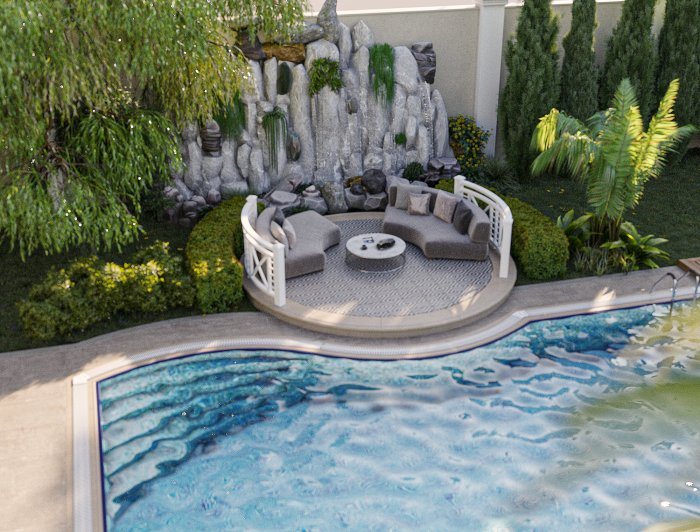
- rock waterfall: water tumbles between natural or artificial stones, a looser and louder flow suited to naturalistic gardens;
- cascade: water drops through several stepped basins or bowls in turn; on sloping plots it makes use of the terrain;
- deck jets or water arcs: thin jets thrown from the pool edge into the water; a simple option where space is limited.
The choice depends on style and on the noise level. A powerful waterfall close to a bedroom window can be a nuisance at night.
Flow and pumps
A waterfall is usually not connected to the pool's main filtration pump but runs on its own pump. The reason is simple: the filtration pump is sized to run steadily for water treatment, while the waterfall should be switched on and off at will. Also, the amount of water needed for an even, attractive flow is directly tied to the width of the spillway: the wider the sheet, the more capacity the pump needs.
Pump selection takes into account the height the water is lifted, pipe lengths and bends. A wide sheet fed by an undersized pump breaks up and dribbles in places. A valve is fitted on the line so the flow can be fine-tuned on site.
The water for the waterfall is drawn from the pool and returns to it. The suction point is therefore chosen so that the pool level does not drop noticeably while the feature runs and the intake does not endanger swimmers. Suction outlets get protective grilles and, where possible, more than one suction point is provided. In a cascade, the volume of the upper basins is calculated as well: water draining back when the pump stops must not overflow the main pool.
Waterproofing and splash
The wall or rockwork behind a waterfall stays permanently wet. It must be waterproofed with the same care as the pool shell; otherwise water soaks into the structure, finishes come away and efflorescence and stains appear on adjacent walls.
Splash has to be planned too. If water falling from a height reaches the pool edge, timber decking or a seating area, those spots become slippery and materials start to deteriorate. The higher the drop, the wider the spray, so enough water surface must remain at the foot of the fall.
Materials and limescale
Stainless steel, natural stone and ceramics are widely used for spillway edges. In hard-water regions, limescale shows up particularly quickly at the spillway because water evaporates there in a thin film. Light stone and dark tiles reveal these marks in different ways. Keeping the water chemistry balanced and cleaning regularly reduces scale build-up.
Lighting and controls
A light placed beneath a waterfall or behind the sheet heightens the evening effect. Lighting in underwater and wet zones must use low-voltage systems designed for those conditions, with circuits protected by residual current devices. The waterfall pump and lights can be linked to the pool control panel, a timer or a phone app.
What to check at design stage
- How far is the waterfall from bedrooms and the neighbouring plot?
- Will the pump sit in the plant room or near the feature?
- Have the pipes been laid before the shell is concreted?
- What paving material is in the splash zone?
- How can the waterfall line be drained in winter?
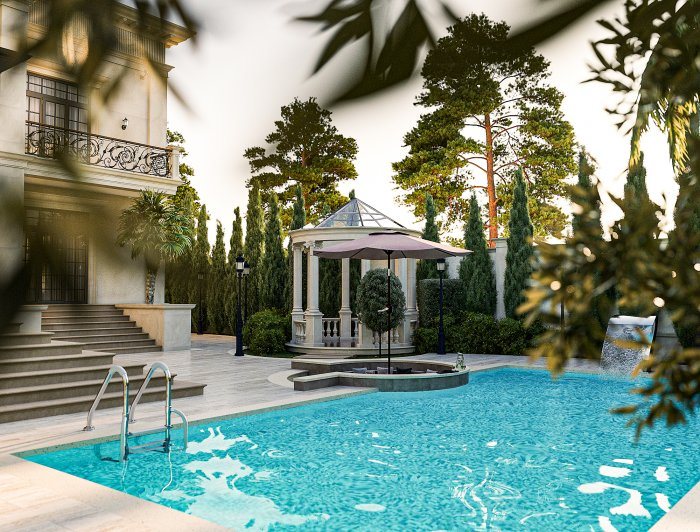
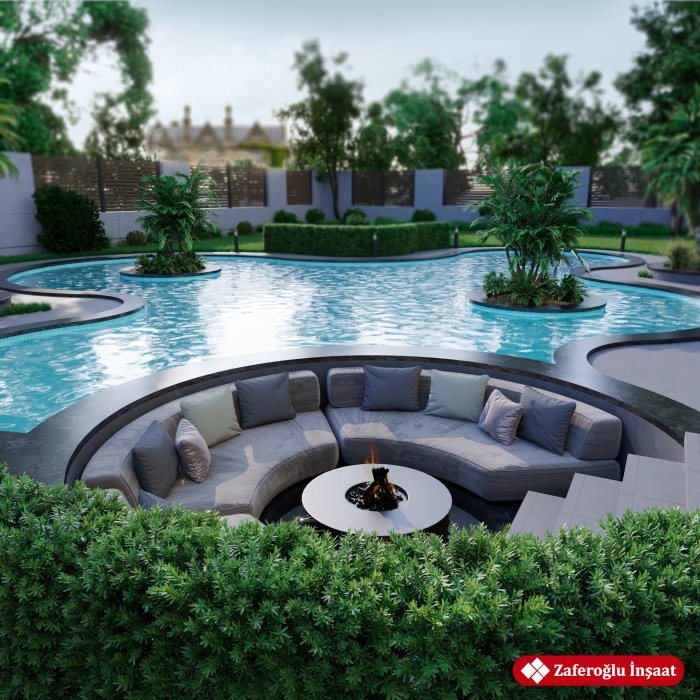
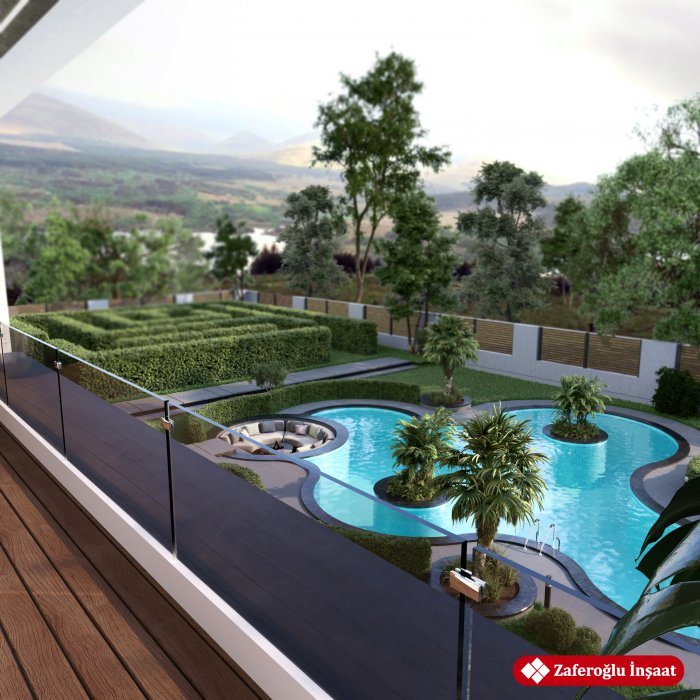
Zaferoğlu İnşaat develops villa pools together with the overall garden composition using computer models, so the size and position of a waterfall can be compared in several versions at this stage. Think about which room you want to hear the waterfall from; its position and height are chosen in the model with that question in mind.
News