
Commercial Flooring: Heavy Traffic and Easy Cleaning
Choosing floor finishes for shops, salons, cafés and offices: foot traffic, cleaning regime, slip resistance, zoning and how easily damage can be repaired.
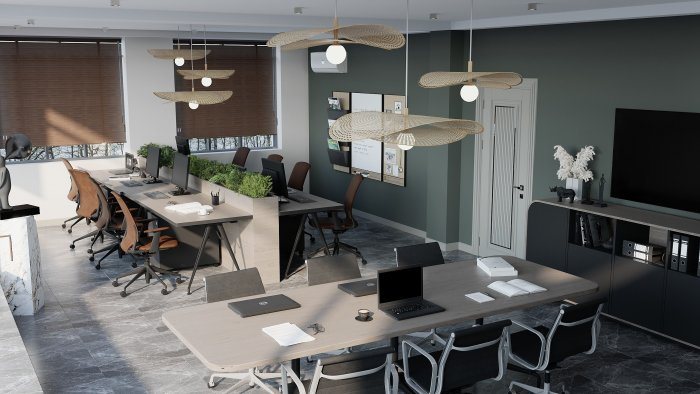
A floor in a commercial space works under completely different conditions from one at home. Hundreds of people walk across it in street shoes every day, chairs and trolleys are dragged over it, and it is cleaned daily, sometimes in the middle of trading hours. When it has to be closed for repairs, the business loses income. So when choosing a floor for a café, salon or shop, the key question is not how it looks, but how it will perform in that regime for years.
Start by describing how the space is used
Two spaces of the same size can have entirely different flooring needs. Before choosing, answer these questions:
- how heavy is daily traffic and where do the main routes run;
- is there direct street access, bringing in sand and rainwater;
- could grease, dye, chemicals or water be spilled on the floor;
- what products and equipment will be used for cleaning;
- will heavy equipment, wheeled trolleys or furniture be moved around;
- for how many days can the business close for work.
These answers narrow the list of materials considerably.
Porcelain stoneware: the all-rounder
Porcelain stoneware is the most widely used material in commercial spaces. It resists wear, stains and chemical cleaners, and is unaffected by moisture. In café kitchens, washrooms and entrances there is practically no alternative.
When choosing porcelain for commercial use, pay attention to the surface. Polished glossy tiles look attractive but are slippery with wet shoes and show scratches quickly. Matt, textured or slip-rated surfaces are safer in public areas. Grout should be stain-resistant and in a darker tone so it does not soil quickly with mopping.
Vinyl and other resilient floors
Offices, clinics, beauty salons and shop floors often use commercial-grade vinyl or other resilient floors. They are more comfortable underfoot, reduce noise and are quick to install. Sheet products with heat-welded seams give an almost seamless surface, suitable where hygiene standards are high.
The weak points of these materials are sharp objects and heavy point loads. Load-spreading pads should go under the feet of salon chairs, shelving and equipment. In beauty salons, hair dye and some cosmetic products can leave permanent marks on resilient floors, so under workstations it is safer to choose a product with proven chemical resistance or to separate that zone with porcelain tiles.
Timber, microcement and poured floors
In restaurants and boutiques a timber floor creates a warm atmosphere. But under heavy traffic the lacquer on real parquet wears quickly and needs regular refinishing. A common compromise is wood-look porcelain or commercial vinyl. If real timber is wanted, it makes sense to use it in the least busy part of the room and to separate the entrance with a tougher material.
Modern cafés and showrooms that want a seamless look choose microcement, or polymer and epoxy poured floors. The surface is continuous and easy to clean. But the result depends directly on base preparation and the installer's experience: cracks in the base can reappear on the surface over time. The protective sealer coats also need renewing periodically.
Zoning, entrances and technical details
Using one finish across the whole commercial space is not always efficient. A sensible division often looks like this:
- a harder, slip-resistant material at the entrance, with a recessed mat well at the door;
- porcelain with falls and floor drains in kitchens, bars and washrooms;
- a design-led finish in the guest or customer area;
- a simple, durable surface in storerooms and technical rooms.
Transitions between finishes must be flush: every lip is a problem for trolleys and wheeled cases. Floor boxes for power and data are positioned in advance according to the furniture layout.
Do not forget repairability
Damage to a commercial floor is inevitable. When choosing, ask: if a tile cracks or a plank is scratched, can it be replaced locally? Is spare material from the same batch kept? Can repairs be done overnight without closing? The answers determine the real operating cost of the material.
Zaferoğlu İnşaat carries out renovations of food-service and commercial premises from design project to completion. Describe your daily footfall and cleaning routine, and we can draft a zone-by-zone flooring scheme from it.
News