
Minimal Curtains for Modern Interiors: Wave Pleats, Clean Lines
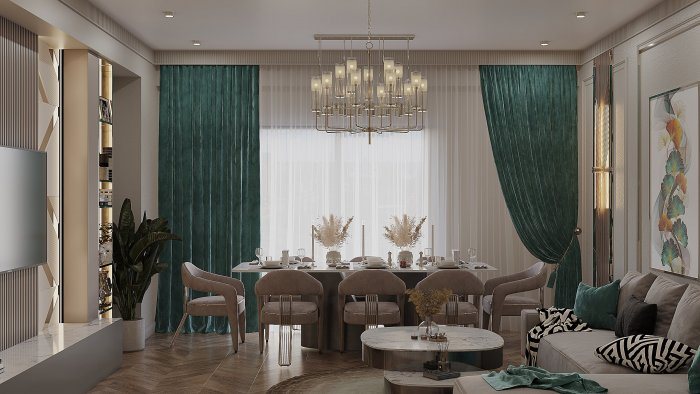
In a modern interior the curtain does not seek attention; it works as an extension of the wall. How wave pleats, hidden tracks, the right length and quiet fabric create that effect.
In a minimalist interior every detail is on show, so a curtain either becomes a calm backdrop to the space or a source of visual clutter. Uneven folds, visible plastic hooks, long brackets on the wall and fabric pooling on the floor may go unnoticed in an ordinary room, but in a clean-lined, sparsely furnished space they jump out at once. The aim of a modern curtain is not to decorate but to soften the window neatly.
What a wave pleat is and why it is chosen
With a wave heading, a special tape is sewn to the top edge of the fabric and the curtain snaps onto gliders in the track. Because the gliders are linked at a fixed spacing, the fabric hangs in soft, identical S-shaped waves along its entire length. The waves stay in place as the curtain opens and closes, and it stacks tightly and neatly.
The difference from traditional headings is clear. Pencil pleat gives small, tight gathers and looks more traditional. Pinch pleats create a more formal effect. Eyelets, metal rings set into the fabric, look contemporary, but the folds are less even than a wave and the pole remains on view. The drawback of the wave heading is that it needs a dedicated track and gliders; it cannot always be adapted to an existing pole. Fabric quantity is calculated according to the system manufacturer's guidance.
The track should disappear
With minimal curtains the track itself is either fully concealed or kept very discreet:
- a concealed ceiling niche makes the curtain appear to fall straight from the ceiling, the cleanest solution of all;
- a slim ceiling-mounted track is a good alternative where there is no niche, chosen in the wall or ceiling colour;
- if a wall-mounted pole is needed, a thin black or white metal rod with simple finials works best.
With a niche or ceiling track, the curtain can run the full width of the wall, corner to corner. This hides the size and position of the window, turns the wall into a single soft surface and brings calm to rooms with asymmetrically placed windows.
Length and the bottom edge
In modern interiors curtains usually reach the floor without pooling on it. Either a small gap is left between hem and floor or the fabric just kisses the floor. Long fabric puddling on the floor has a romantic, classic feel that breaks the graphic line of minimalism. A sill-length curtain, meanwhile, looks unfinished in most contemporary living rooms.
Ceiling and floor may not be perfectly parallel. Unless the drop is measured at several points along a long wall, you end up with a gap at one end and bunched fabric at the other. For sheers, a slim weighted tape along the hem keeps the fabric straight.
Fabric and colour
Linen and linen-look synthetics, tightly woven light sheers and plain fabrics with a matt surface suit minimal interiors well. Shiny satin and large patterns disrupt the calm backdrop. The colour is often kept close to the wall: on white or pale grey walls, white, cream, sand and light grey curtains keep the space unified. In interiors with dark walls or black details, graphite and dark grey curtains continue the same crisp line.
In minimalism, texture takes the place of colour. A plain fabric with a noticeable weave keeps a room from feeling cold and sterile.
Typical mistakes
- Visible plastic hooks and folds of different sizes.
- Too many layers: sheer, heavy curtain, roller blind and extra decor all on one window.
- Curtains hung narrower than the window opening, so that when open they cover the edges of the glass.
- Fabric pooling on the floor or, conversely, curtains ending well above it.
- A concealed niche planned without enough depth for two tracks or a motor.
Short planning list
- Think about the wall, not just the window: corner to corner, or only the window section?
- Decide on a niche or ceiling track before ceiling work begins.
- If two tracks are needed for a sheer and a heavy curtain, build that into the niche size.
- Measure the drop at several points.
- Check the fabric sample next to the wall colour.
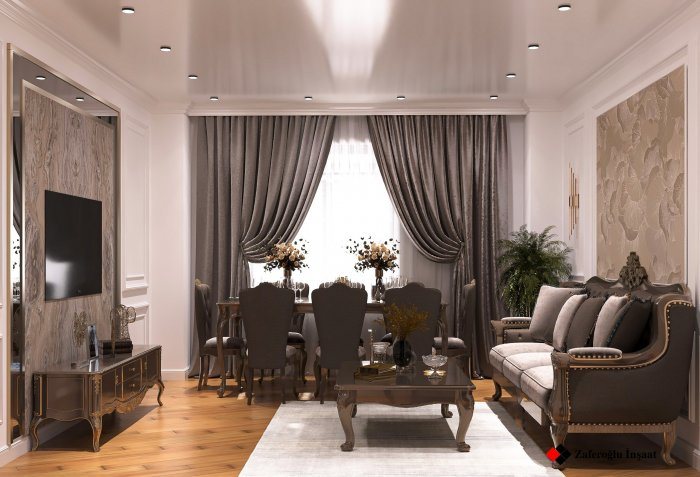
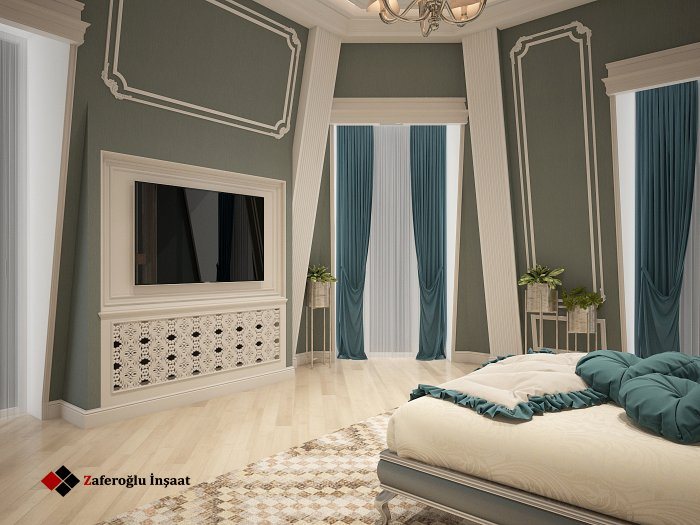
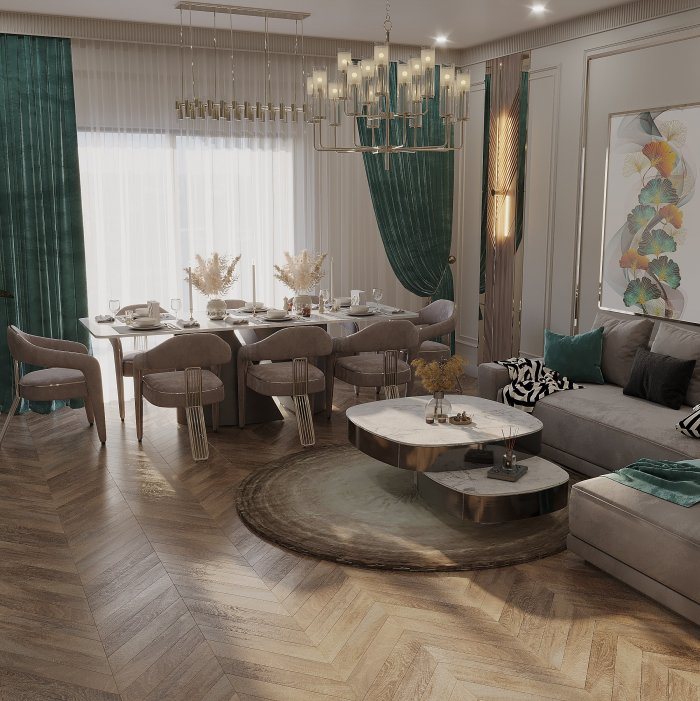
In modern apartment and villa interiors, Zaferoğlu İnşaat develops the curtain niche, ceiling construction and wall colours as parts of a single design solution. Seeing in a computer model how a curtain will look along the wall before the ceiling work starts reduces the need for changes later.
News