
Curtains for a Child's Room: Safety and Practicality
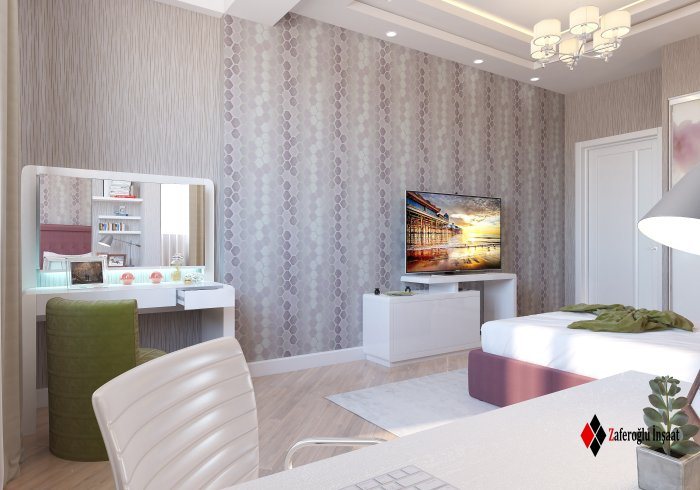
In a child's room, choosing curtains starts with safety rather than colour: cords and chains, secure tracks, small decorative parts. Sleep, cleaning and a growing child come next.
For adults a curtain is part of the decor; for a small child it is something to pull, climb, chew and draw into play. That changes the order of questions when choosing curtains for a child's room: first is it safe, then is it practical, and only then how does it look. This order does not mean giving up on a lovely room; it is simply the right starting point so you are not replacing the curtains later.
Cords and chains: the main hazard
The operating cords and chains of roller blinds, Roman blinds and Venetian blinds pose a strangulation risk to young children. A child can get their head or neck caught in a loop, and it happens quickly. In Europe, the safety requirements for internal blinds are set out in the EN 13120 standard, which calls for specific safety devices on corded products.
In practice the risk is reduced in several ways:
- the most reliable option is a cordless system: blinds pulled by hand from the bottom rail, spring-operated or motorised;
- if a chain system is chosen, the chain is kept taut with a tensioner fixed to the wall so that it cannot form a free loop;
- cords are fitted with breakaway connectors that separate under strong pulling;
- cots, beds, sofas, chests of drawers and any other furniture a child could climb are kept away from windows with cords.
Tracks and fixings
Children grab and tug curtains, hide behind them and sometimes try to swing on them. A poorly fixed pole can come down, bringing both the pole and its brackets onto the child. In a child's room the track should therefore be fixed with plugs suited to the wall material, and plasterboard walls and ceilings need solid backing. A ceiling track or concealed niche is more secure in this respect than a wall-mounted pole.
Length matters too. Long fabric pooling on the floor is both a trip hazard and an invitation to pull the curtain down. Curtains that stop just above the floor, or a short treatment to the sill, are the calmer option.
Decorative details and fabric
Beads, tassels, buttons, glued-on appliqués and small metal rings can be torn off and put in the mouth once they are within a small child's reach. For babies and pre-school children it is better to skip these details and bring in decoration through pattern and colour.
Fabric has its own criteria:
- machine-washable fabric, because curtains in a child's room get dirty quickly;
- a low-pile weave that does not trap dust, especially for a child prone to allergies;
- fabrics treated for flame resistance or with stated fire-safety performance, particularly if a night light sits near the curtain;
- hooks or rings that release easily so the curtain can be taken down and rehung quickly.
Sleep and light
Babies nap during the day, and in summer early sunrise can wake a child before they are ready. Blackout fabric or a blackout roller blind solves this. Keeping the room dark all day is not right either, though: play and homework need natural light. The most practical set-up is two layers: a darkening roller or heavily lined curtain close to the window, and a light fabric in front for daytime. If light leaking around the edges of the roller is a problem, choose a cassette system with side channels.
For children who are afraid of total darkness at night, the curtains can be left slightly open or a separate night light used; that call rests on the parents' knowledge of their child.
Planning for a child who grows
Curtains with cartoon characters look sweet for a toddler, but within a few years the child will want to change them. A longer-lasting approach is a neutral or quietly coloured main curtain, with the child's colours and themes brought in through easily changed details such as cushions, wall stickers, rugs and bedspreads. By the teenage years the room is both bedroom and study; at that point adding a Venetian blind or a screen roller to cut glare on a monitor makes sense.
Quick checklist
- No loose cord or chain loops remain in the room.
- The track is fixed in a way that suits the wall and ceiling material.
- There are no small decorative parts that can be pulled off.
- The fabric is washable and quick to take down and rehang.
- There is darkness for naps and natural light for play.
- No furniture by the window gives a child a way to climb.
In apartment and villa projects, Zaferoğlu İnşaat discusses room layouts and the choice of materials and colour palette at the design stage. When the window, bed and curtain system of a child's room are planned together, safety requirements do not get in the way of a beautiful interior.
News