
Curtain Decor in Classic Interiors: Pelmets, Tiebacks, Fringe
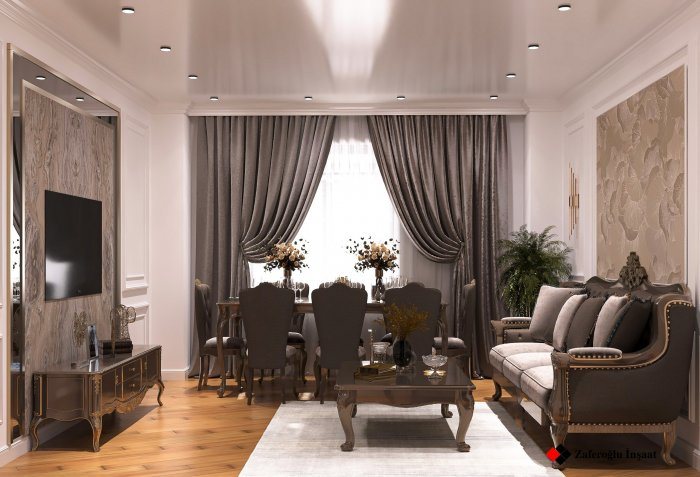
In a classic interior a curtain is not one piece of fabric but a composition of pelmet, tiebacks, fringe and pole. Ceiling height, proportion and restraint all need to be right.
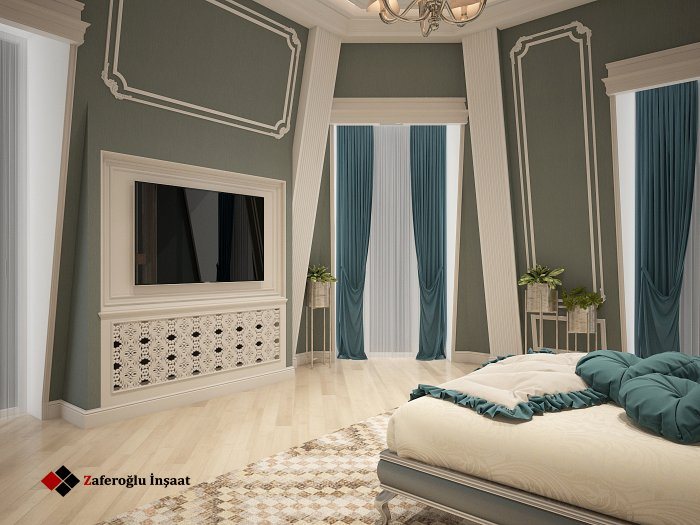
In classic, neoclassical and baroque interiors, the window has to speak the same language as the wall mouldings, the chandelier and the carved furniture. A plain flat curtain looks unfinished in such a room, while an over-decorated one turns the window into a heavy mass that swallows the light. The secret of classic curtain decor lies not in the elements themselves but in their scale and how well they fit the room's architecture.
Pelmets: types and role
A pelmet, or valance, is a horizontal decorative element covering the top of the curtain. It hides the track or pole, frames the window as a finished composition and can visually correct the window's proportions.
- A hard pelmet is fabric stretched over a stiff base, cut with a straight or shaped edge. It looks neat and restrained in a neoclassical interior.
- A soft pelmet is made of swags of fabric hanging in arcs, with vertical tails (jabots) falling at the sides. It is more ceremonial and suits baroque-spirited interiors.
- A combined pelmet adds soft swags or tails on top of a stiff base.
The pelmet is fixed separately from the curtain, either to the front run of the track or to its own timber board with hook-and-loop tape. That makes it easy to take down for cleaning.
Before choosing a pelmet, measure how much wall there is above the window. If the opening sits very close to the ceiling, the pelmet has to drop over the top of the glass and the room gets darker. In that case, fixing the track to the ceiling and starting the pelmet right from the ceiling, or dropping the pelmet and carrying the decor through tiebacks and fringe instead, may be the better decision.
Ceiling height and proportion
Because a pelmet covers the top of the window, it visually lowers the ceiling. A rich soft pelmet looks at home in a high-ceilinged villa living room, whereas the same design in a standard-height apartment makes the room feel cramped. A few practical rules help:
- fix the pelmet above the window, as close to the ceiling as possible, so it covers less glass and makes the window look taller;
- if the ceiling is low, choose a slim hard pelmet or use tails at the sides only;
- set the pelmet's depth in proportion to the overall curtain length; too deep and it weighs the curtain down, too shallow and it looks accidental;
- if one wall has several windows, the pelmets should be at the same height and of the same shape.
Tiebacks and holdbacks
A tieback gathers an open curtain to the side and creates the curved silhouette so typical of classic interiors. Options include woven cords with tassels, fabric bands and metal holdbacks fixed to the wall. Tasselled cords belong with baroque and opulent classic schemes, while a simple fabric band or a restrained metal holdback sits closer to neoclassical style.
The height of the tieback changes the look of the curtain. Gathered low, roughly at sill level, the curtain looks calm and heavy; gathered higher, it opens up more of the window and forms a more decorative curve. The best way to decide is to gather the curtain by hand at different heights before fixing the holdback to the wall.
Fringe, trims and poles
Fringe is sewn along the lower edge of the pelmet and sometimes down the leading edge of the curtain, emphasising the outline. If the room already has plenty of gilding, carving and pattern, choose fringe in the curtain colour; in a quieter interior a contrasting fringe may be the accent the room needs. A fabric border or piping is a softer alternative for modern classic schemes.
A classic look without a pelmet is also possible: an exposed pole with decorative finials, rings and a heavy curtain gathered with tiebacks. In that case the colour of the pole and the shape of its finials should harmonise with the door handles, chandelier and wall sconces.
Fabric and common mistakes
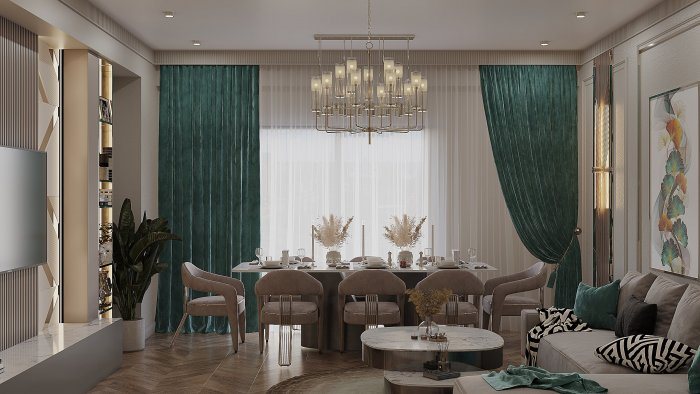
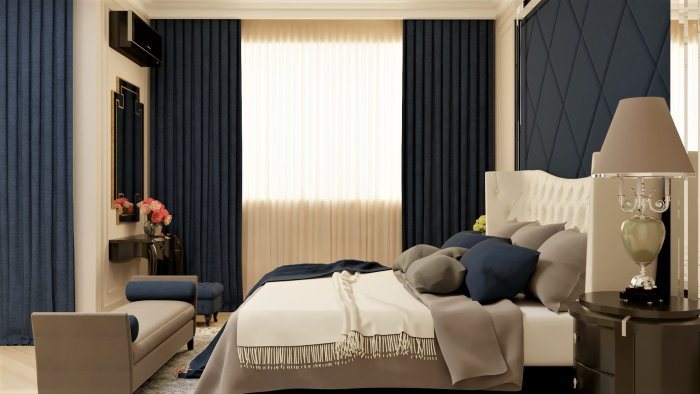
Classic curtains use jacquard, velvet, heavy satin, silk-effect fabrics and patterned damask. They are customarily paired with a light sheer so the room does not feel heavy.
The most common mistakes are:
- a multi-layered pelmet designed for a large villa squeezed into a small room;
- a pelmet covering much of the glass and darkening the room;
- too many colours and textures across curtain, pelmet, fringe and tiebacks;
- decor that gathers dust with no thought given to how it will be cleaned;
- a curtain line that does not relate to the wall mouldings and ceiling cornice.
Zaferoğlu İnşaat's portfolio includes visualisations of classic and neoclassical interior projects, and Pərdə Zaferoğlu offers decor and accessories to complete curtains. A quick sketch of the window wall with its mouldings shows whether a pelmet and fringe will sit well or overload the room.
News