
Window Treatments for Panoramic Windows
Floor-to-ceiling glass gives a great view, but sun, glare, evening privacy and sliding doors call for a tailored solution. Planning tracks, stacking space and layers.
A panoramic window opens up a room and turns the view into part of the interior. The same expanse of glass, however, heats the room in summer, throws glare onto the TV at midday and at night turns a lit room into a shop window for the street. The approach that works on an ordinary window often falls short here: the fabric is heavy, the track is long, and part of the glazing is a door onto the terrace.
What a panoramic window needs
Before choosing a solution, it helps to define what the window has to do:
- soften sun and glare during the day without shutting out the view;
- provide full privacy in the evening when the lights are on;
- in a bedroom, block early morning light;
- keep an easy path through the sliding door;
- leave as much glass clear as possible when open.
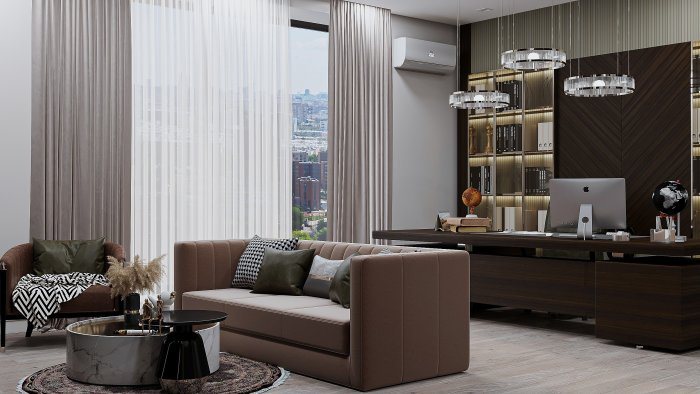
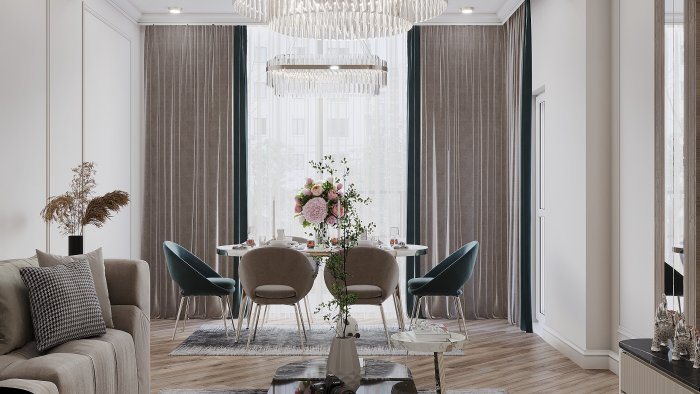
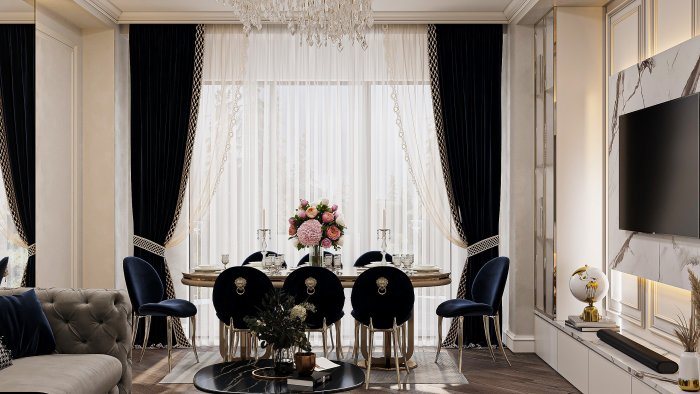
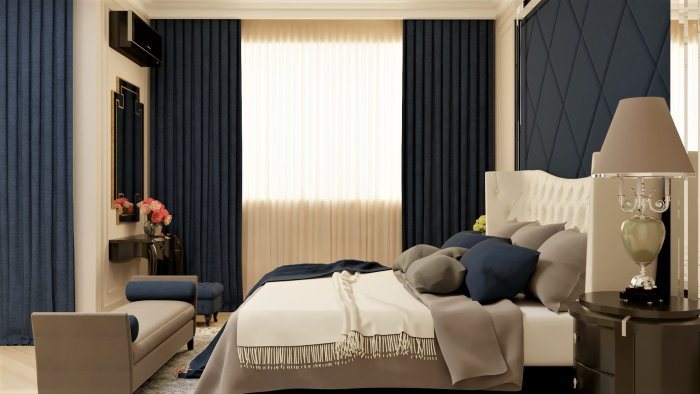
These needs are usually met with two layers rather than one: a light sheer or light-filtering fabric close to the glass, and a heavier room-darkening curtain in front of it.
On a ground floor, or where a neighbouring building is close, privacy matters during the day as well. Here the layer nearest the glass is a densely woven sheer or a screen fabric that makes it harder to see in, while the heavy curtain is kept for the evening. On an upper floor with an open outlook, a more transparent day layer protects the view and the sheer itself becomes almost unnoticeable.
Tracks: ceiling-mounted, recessed and curved
On a panoramic window a pole hung on the wall above the opening rarely looks right, because there is so little wall left above the glass. A ceiling-mounted track or a concealed ceiling niche gives a more natural result: the curtain falls straight from the ceiling and the full height of the window is preserved.
A long track needs solid fixings, as a large area of fabric is genuinely heavy. With a plasterboard ceiling, plan firm backing along the whole track line. Corner panoramic windows use either a bendable aluminium track or two tracks meeting at the corner; with a curved track, the bend radius must stay within what the system allows so the gliders do not jam.
Where the curtains will stack
When open, curtains gather somewhere, and that stack takes up a fair amount of width. The most common mistake is not planning for it: the open curtains end up covering both edges of the glass and the panoramic effect is lost.
Ideally, some wall space is kept beside the window for the curtains and the track extends past the glazing. If that is impossible, all the curtains can stack to one side, towards the corner where the view matters least. Mind the position of the sliding door too: curtains should not bunch up in front of the section used as a daily passage.
Fabric, heading and length
For smooth movement along a long track, a wave heading is a good choice: the fabric hangs in even waves, stacks compactly and keeps its folds when drawn. For sheers, a weighted tape or weighted hem keeps the fabric straight and reduces billowing in a draught.
Length depends on practical needs. Curtains touching the floor look striking, but where there is a sliding door or a robot vacuum at work, a small gap above the floor is more convenient. Because the ceiling-to-floor drop is long on a panoramic window, measure at several points: ceilings and floors are not always perfectly level along the whole run.
Alternatives and additions
- A separate roller blind for each glass section: it follows the frame lines, but narrow strips of light remain between sections.
- Screen-fabric rollers: cut daytime glare without fully hiding the view.
- Motorisation: drawing a long, heavy curtain by hand every day is tiring, so here a motor can be seen as a practical necessity rather than a luxury.
- External shading: in a hot climate an internal curtain holds back the sun's heat only after it has passed through the glass, while external shading stops it before it reaches the glass. This is most effective when resolved at the architectural design stage.
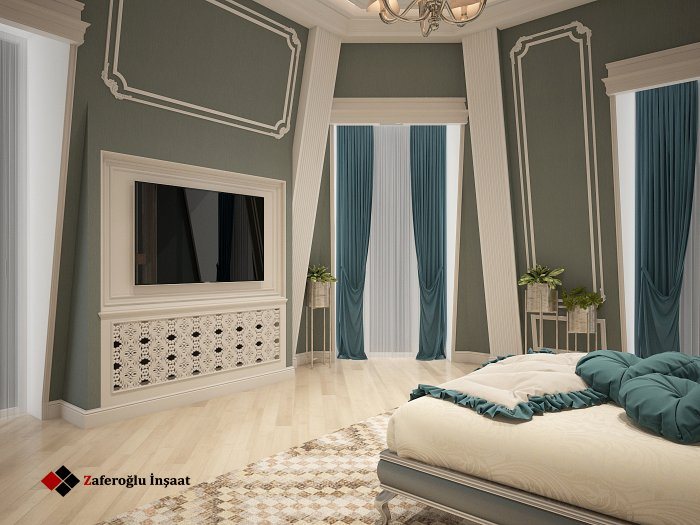
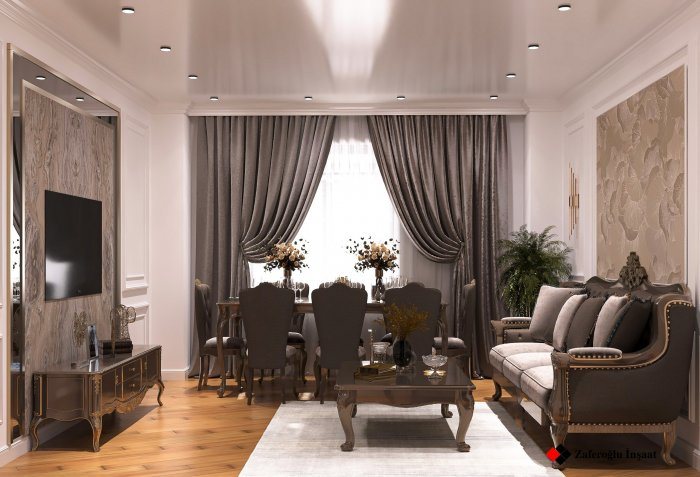
In its architectural and design work, Zaferoğlu İnşaat presents both the exterior and the interior of a home through sketches and computer models. When panoramic glazing, curtain niches and shading are considered in the same project, a large window ends up both beautiful and comfortable to live with.
News