
Curtain Colours and Patterns: Matching the Interior
Curtains are one of the largest fabric surfaces in a room, and their colour shifts with the light. How to handle tone, pattern scale and testing samples in the real room.
Once walls, floors and furniture have been chosen, curtains are often treated as the finishing touch. In reality, two panels dropping from ceiling to floor form one of the largest areas of colour in the room. On top of that, light passes through them, so a curtain's colour changes not only itself but the tone of the whole room during the day. Choosing colour and pattern therefore deserves more thought than picking a swatch you like from a sample book.
Three basic approaches
The role curtains play in an interior usually follows one of three routes.
The first is tone-on-tone with the walls. The curtain is a shade lighter or darker than the wall, the window merges with the wall, and the room feels calm and more spacious. It is a safe route for small rooms and for interiors that already have plenty going on in the furniture.
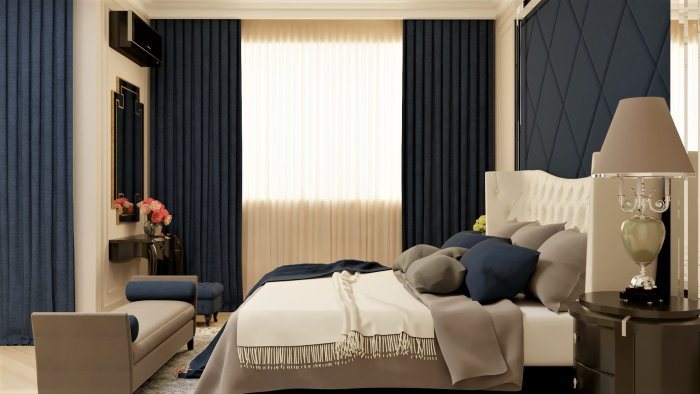
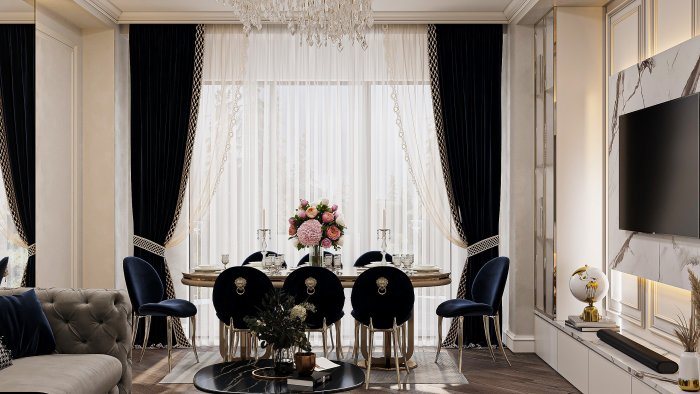
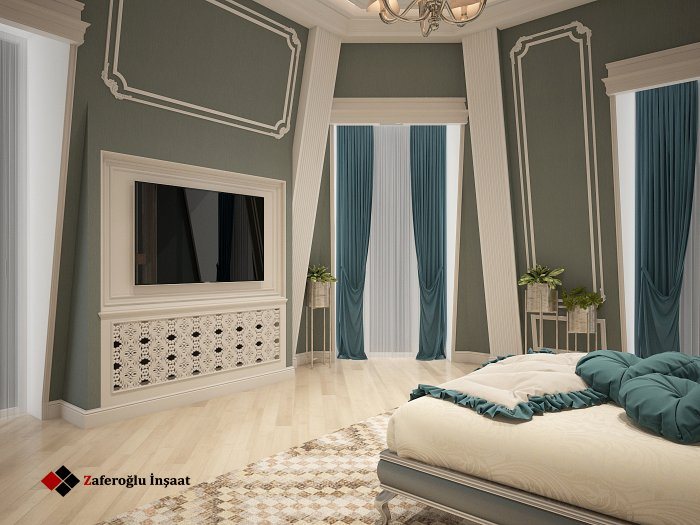
The second is contrast. Against a neutral wall, a deeply coloured curtain becomes the accent of the room. In that case the contrasting colour should be echoed in at least one or two small details, such as cushions, the pattern of a rug or a picture, so the curtain does not look accidental.
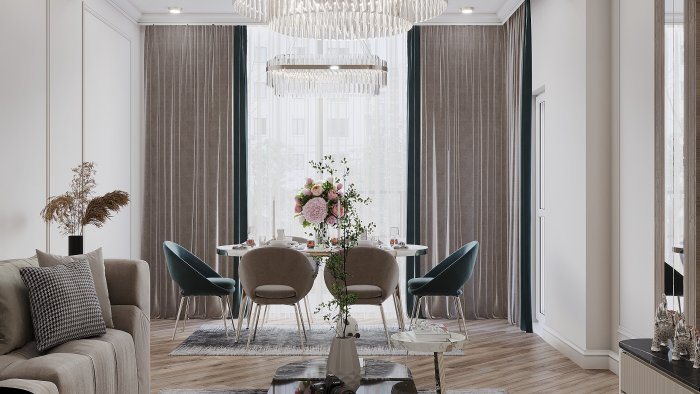
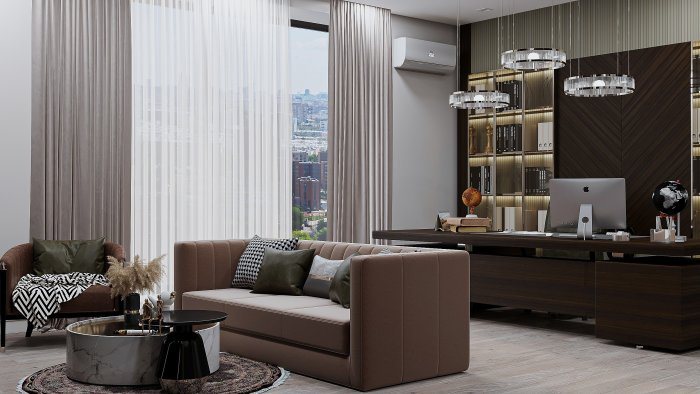
The third is to take the colour not from the walls but from another element in the room: the sofa fabric, the rug, the tone of timber furniture. This works especially well in rooms with white or grey walls, pulling the space together.
Colour and light
Daylight takes on the colour of the fabric it passes through. Warm yellow, orange and terracotta curtains make a room look warmer and more golden during the day; cool blues and greys make the light feel cooler. In a room that gets little sun, cold dark curtains can make the atmosphere gloomier still, while in a very sunny room cooler tones feel refreshing.
In the evening the situation reverses: the light source is inside the room and the curtain is lit from the front rather than from behind. A fabric that looks light and bright by day appears darker and denser at night, and under warm-toned lamps cool colours can turn greyish. Judging a curtain colour by daylight alone is therefore only half a decision.
There is a practical side too: bright and dark colours fade over time in direct sun. If you choose such a colour for a sunny window, a lining or a second layer closer to the glass, such as a sheer or a roller blind, gives the fabric some protection.
Pattern scale and direction
Pattern reads differently at a distance. A small print looks like texture from a few steps away and does not overload the room. A large pattern is clearly visible; it works well on big windows and in rooms with high ceilings, but in a small room it can make the walls feel closer.
The direction of stripes has its own effect. Vertical stripes make the ceiling seem higher, horizontal ones make the window feel wider. When several panels hang side by side, the pattern must line up from one to the next. That means taking the fabric's pattern repeat into account, which increases the amount of fabric needed compared with a plain one, and this should be calculated when measuring.
Combining patterns in one room
A room can have several patterns, but they need a hierarchy:
- choose one dominant pattern, for example on the curtains or the rug;
- make the second pattern smaller and quieter, with colours drawn from the dominant one;
- keep the remaining surfaces plain or rely on texture.
If the wallpaper is patterned, it is safer to keep the curtains plain or pick up the quietest tone in the wallpaper. Otherwise the window does not stand apart from the wall and the room looks busy.
Testing a sample in the room
A small swatch looks one way under shop lighting and another at home. Before deciding:
- hold the largest sample you can get vertically in front of the window and gather it into folds, because a curtain is seen in folds, not as a flat sheet;
- view the swatch in morning light, at noon and after dark with the lamps on;
- check how the colour changes when sunlight shines through it from behind;
- place it next to the sofa, the floor and the wall.
If you like to refresh your interior often, neutral curtains with changeable accessories are the longer-lasting choice: cushions, throws and tiebacks can update the room's colour accent without replacing the curtains.
Within Zaferoğlu İnşaat's design service, designers help settle material combinations and the colour palette and show the overall look of a room in advance through sketches and computer models. When the curtain colour is chosen at that stage alongside walls, floors and furniture, mismatches do not surface later.
News