
Greenery in Offices: Practical Biophilic Design
Treating office plants as part of the plan rather than decoration: light, watering, planted dividers, green walls and who is responsible for care.
Biophilic design is about bringing people’s connection with nature back into interiors: plants, daylight, materials such as wood and stone, a view outside. In offices it usually starts with plants, and that is also where it most often fails. The pots placed for the opening turn yellow within a few months, because nobody planned light, water or a person responsible for them.
Plants are a system, not decoration
Long-lasting greenery depends on three answers: will the plant get enough light, how will it be watered, and who will look after it? When these questions are answered at the design stage, plants become part of the plan. Otherwise they are just items that keep getting replaced.
It helps to plan plant positions alongside the furniture layout. Zones near windows go to light-loving species, while deeper parts of the office get shade-tolerant plants or supplementary lighting.
Light: the most overlooked condition
In parts of an office far from windows, light that seems fine to the eye is usually too little for plants. There are two options: choose shade-tolerant species or install dedicated grow lights. In the second case, think about running them on a timer independent of office hours and positioning them so they do not cause glare.
In front of south-facing windows the opposite can happen: strong summer sun can scorch some leaves. Curtains or blinds protect both staff and plants.
Planted dividers and green walls
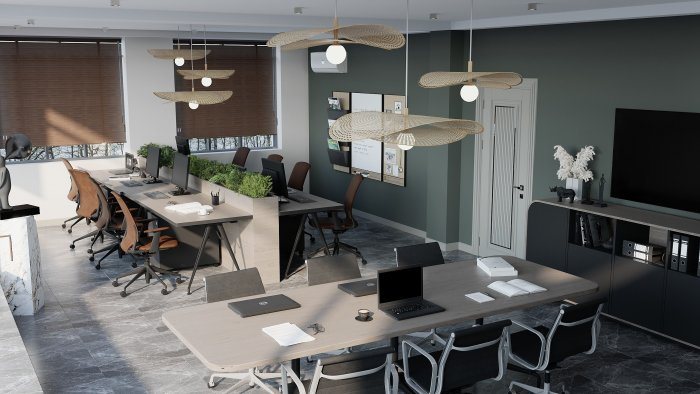
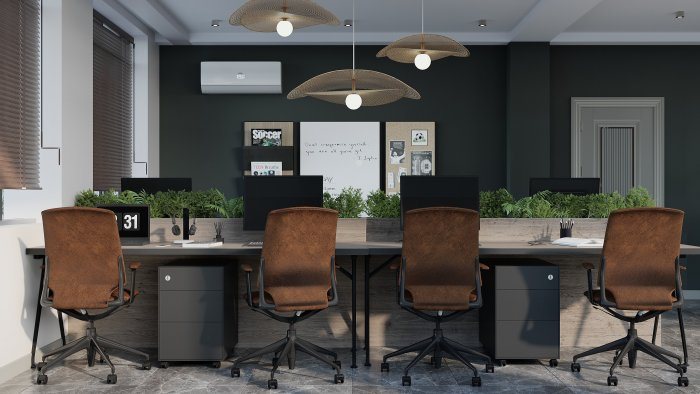
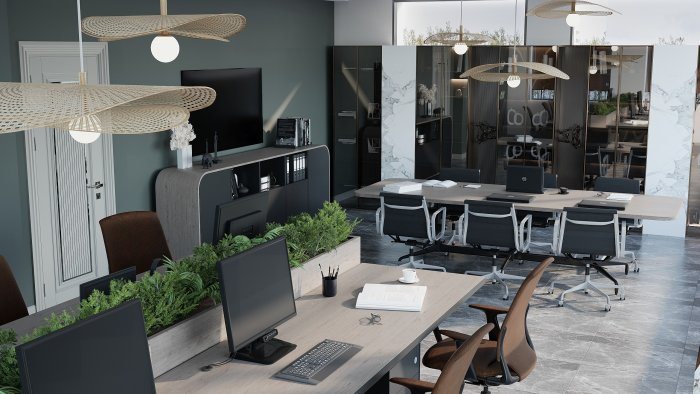
Plants work well as a zoning tool in an open office. Long planter shelves or plant boxes separate work groups and create visual calm without blocking light. A divider of tall plants even scatters some sound, although it does not replace a proper acoustic solution.
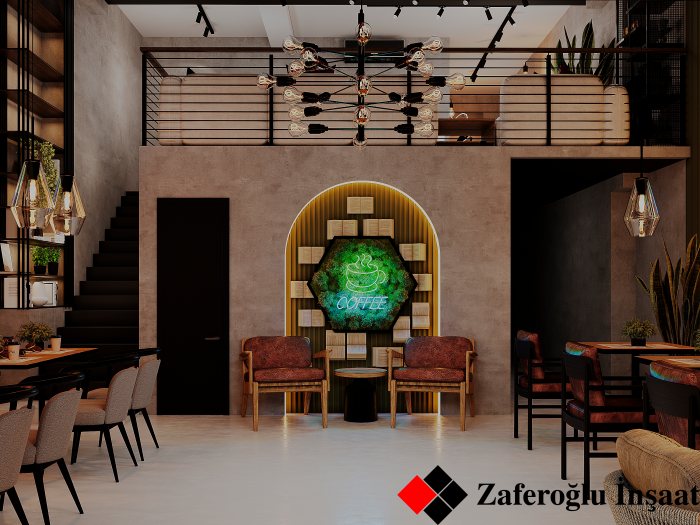
A green wall is more striking and also more demanding. A living wall needs an irrigation system, drainage, protection of the wall behind from moisture and often dedicated lighting. That means running a water line and a power point during renovation. The other side of that wall should not be an electrical room, an archive or a paper store, since even a small leak in the irrigation can do serious damage there. If maintenance capacity is limited, preserved moss panels are an alternative: they need no watering or light, but they are not alive and can deteriorate over time in very dry air.
Planters, watering and care
Water collecting under large planters is a serious threat to parquet and laminate. Choose planters with a watertight inner liner and a saucer, and protect the floor from moisture. Self-watering planters reduce how often plants need watering and lower the risk over weekends when the office is empty.
Weight matters too: large planters filled with soil and water can place a heavy load on a raised floor or a mezzanine.
How long greenery lasts depends on who is in charge of it. There are two routes: give one employee responsibility or sign a contract with a professional plant-care service. Either way, there should be a simple schedule for watering, dusting leaves, feeding and replacing sick plants.
When choosing plants, also check for allergy risks and toxic species, especially if visitors bring children or pets are allowed in the office.
Biophilic elements beyond plants
Greenery is only one part of biophilic design. Opening the way for as much daylight as possible, keeping views to windows from workstations, and using natural textures such as wood, stone and linen with a calm natural palette create the same feeling. Sometimes one solid wooden table and a window seat do more than dozens of small pots.
Checklist
- Light conditions have been assessed for each planted zone.
- Water, drainage and power for a green wall are planned in advance.
- Planters protect the floor from moisture.
- A responsible person or service for care has been named.
- Allergy and toxicity risks have been checked.
In office projects, Zaferoğlu İnşaat helps combine design materials and choose colour schemes. Decide early who will look after the plants and how; that is what should set the amount of greenery in the design.
News