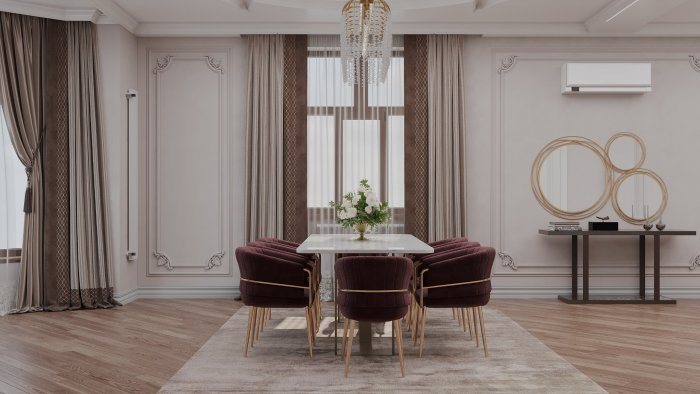

Sheers and Drapes: Layering Them Correctly
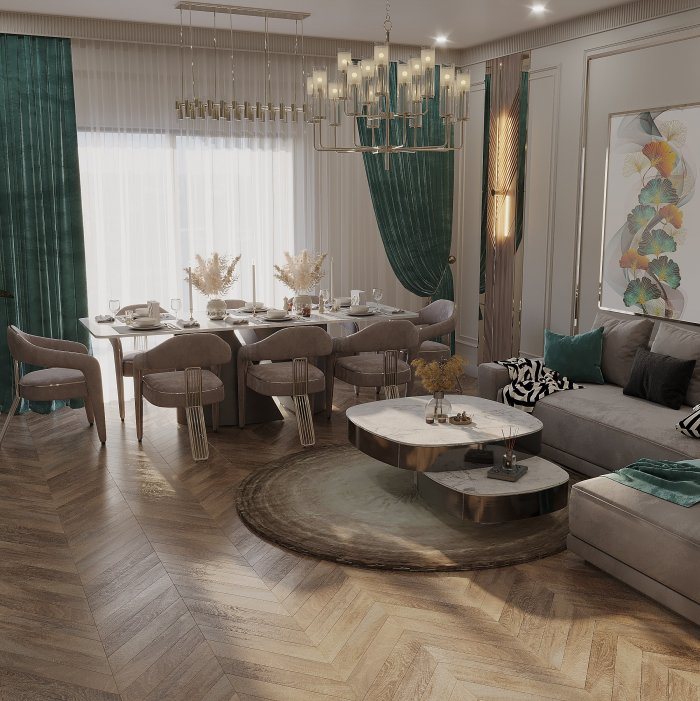
When sheers and drapes work together, light and privacy are managed by day and darkness and warmth by night. Success depends on matching the track, density, colour and length.
A classic two-layer curtain might seem old-fashioned to some, but there is a practical reason it is so widespread. One layer lets light in during the day while hiding the interior from view; the other closes the room completely in the evening. The problem is usually not the layers themselves but how poorly they are matched: the sheer hangs longer than the drape, the colours clash, or the layers snag on each other on the track.
Give each layer a job
The role of each layer should be clear from the start. A sheer or light curtain works by day: it diffuses sunlight, fills the room with soft light and reduces how much can be seen from outside. The heavy drape is mainly for evening and night: it blocks light, holds back some of the cold from the window and adds colour and texture.
Sometimes drapes are never fully closed and remain purely decorative side panels. In that case they can be narrower, but the decision must be made early, because if the panels are not meant to close, another solution will be needed to block light.
Balancing density and transparency
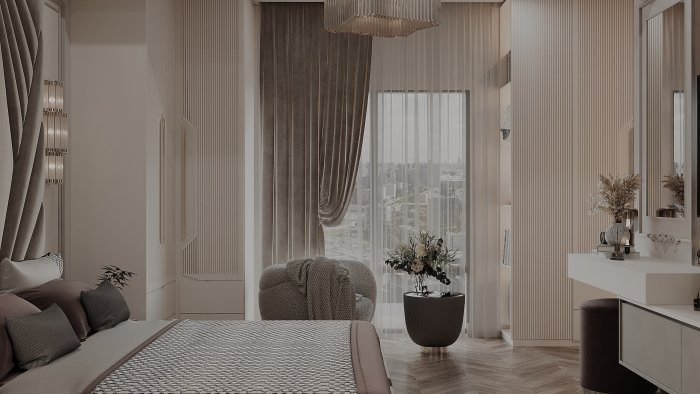
Sheer density is chosen according to the window's position. On a ground floor facing the street, a more tightly woven or linen-type sheer reduces daytime visibility better. On an upper floor with no building opposite, an almost transparent voile lets in the maximum amount of light.
Keep in mind that in the evening, with lights on inside, a sheer loses its screening effect: a lit room can be seen from outside even through the sheer. So if privacy matters in the evening, a heavy layer or a blackout roller blind is essential.
Matching colour and texture
There are three main approaches to the colours of the two layers:
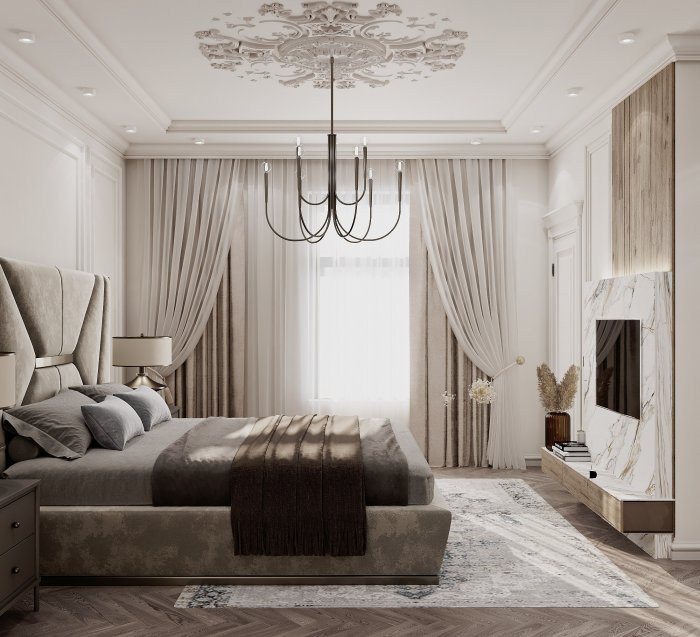
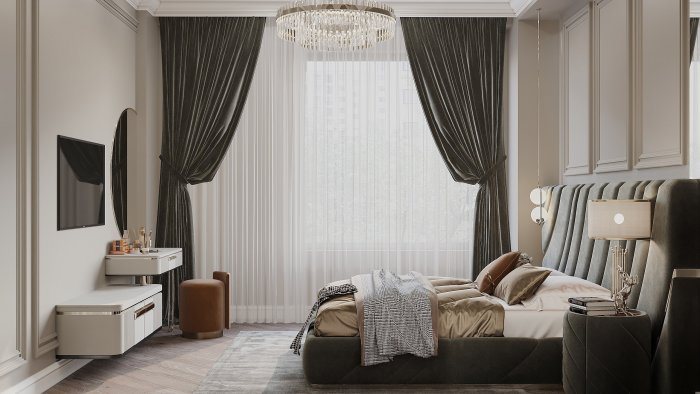
- tone on tone: sheer and drape from the same colour family, the drape a shade or two darker; a calm and safe choice;
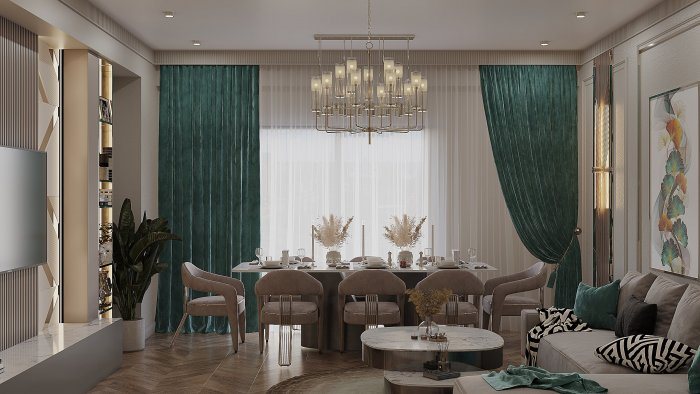
- neutral sheer, coloured drape: a white, cream or pale grey sheer with coloured velvet or linen; the accent sits in the heavy layer;
- textural contrast: the same colour, but one fabric glossy and the other matt or coarse to the touch.
The sheer's colour also changes the colour of light entering the room. A warm cream sheer softens light, while a cool white sheer can make a north-facing room look paler. Holding a fabric sample up to the window in daylight always gives a more accurate result.
Tracks and layer placement
Two-layer curtains need a double track or two separate profiles. The sheer usually hangs closest to the window and the drape on the room side. The profiles must be far enough apart that the folds do not rub and the drape does not drag the sheer as it opens and closes.
If a concealed curtain recess is planned in the ceiling, its width is chosen to accommodate the fold depth of both layers. In a narrow recess the two layers are squashed and the curtains do not hang straight. If a motorised system is planned, usually the drape, and sometimes both layers, are motor-driven.
Length and edges
Both layers follow the same length principle: either hanging straight just clear of the floor, or lightly touching it. A sheer that hangs lower than the drape or peeks out beneath it looks untidy. If there is a radiator under the window, long heavy drapes can block heat from reaching the room; in that case the heavy layer is kept open or the heater is positioned so the curtain does not cover it.
Making the drape slightly wider than the sheer helps: when closed, less light leaks at the sides, and when open, the sheer is fully visible.
Check before deciding
- Do you need privacy in the evening?
- Does the sheer reduce visibility from the street enough during the day?
- Is there room and spacing on the track for two layers?
- How do the colours look in daylight and artificial light?
- Are both layers the same length relative to the floor?
- Can each layer be washed separately?
Pərdə Zaferoğlu presents its curtain designs in a rich range of fabrics and colours, complemented by decor and accessories. Holding a sheer and a heavier fabric together against daylight shows in a minute whether the pairing works.
News