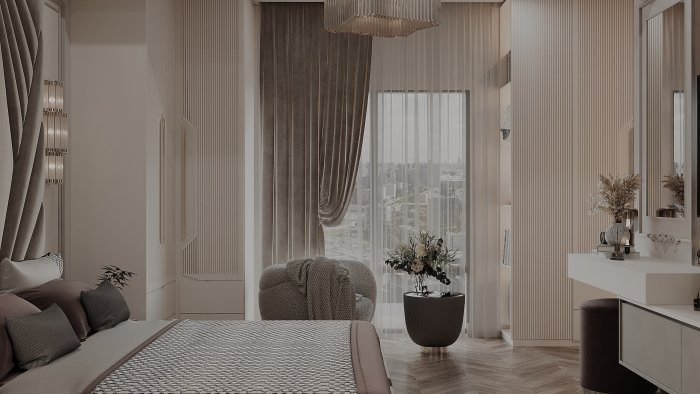

Upholstered Wall Panels: Use in Bedrooms and Media Rooms
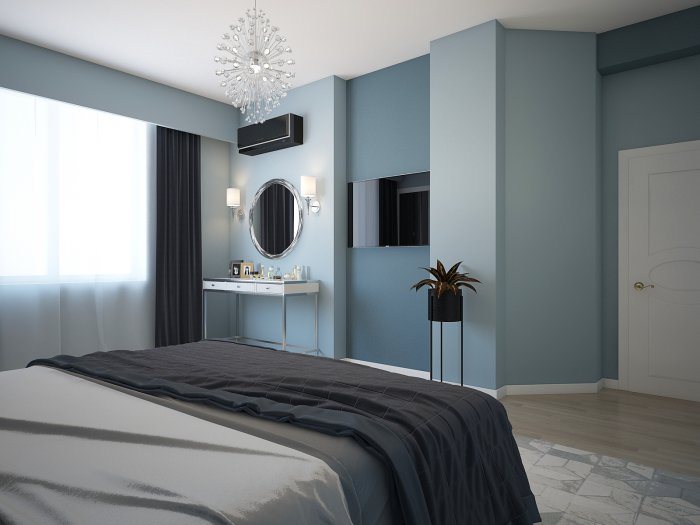
Upholstered wall panels give a bedroom a comfortable headboard wall and a media room a sound-softening surface. Material, padding, fixing and fire safety need thought in advance.
For many people an upholstered wall panel is a decorative touch borrowed from luxury hotel interiors. In practice it does both functional and aesthetic work: a soft surface to lean against instead of a cold wall, less echo in the room and visual depth on the wall. Poorly planned, though, it can become a covering that soils quickly, hides sockets and is hard to remove later.
What an upholstered panel is made of
A classic panel has three layers: a rigid base, soft padding and a cover. The base is usually cut from board material and is the part fixed to the wall. The padding is foam of varying density; dense foam holds its shape for a long time, while softer foam looks fuller but may keep an imprint when pressed. The cover can be fabric, natural leather or a synthetic alternative.
Panel shape is part of the choice too: rectangular modules, horizontal bands, buttoned capitonné or geometric shapes with rounded edges. The module size should divide evenly into the wall so that no odd half-pieces are left at the edges.
In the bedroom
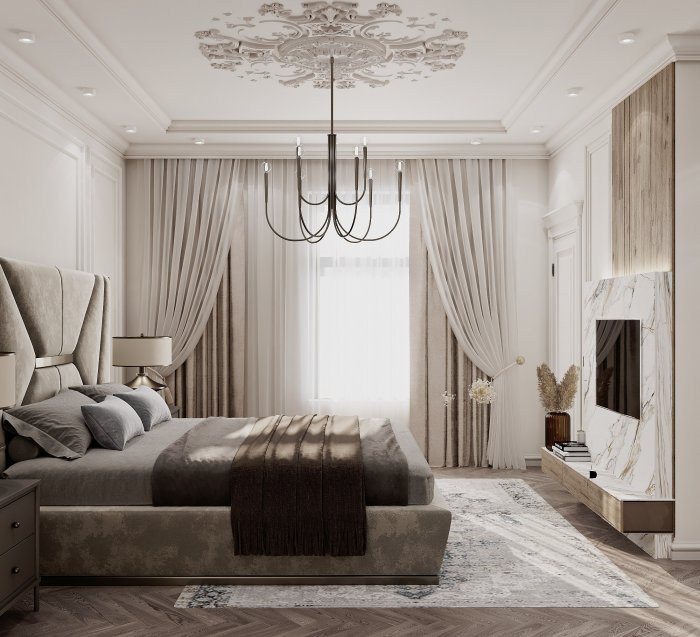
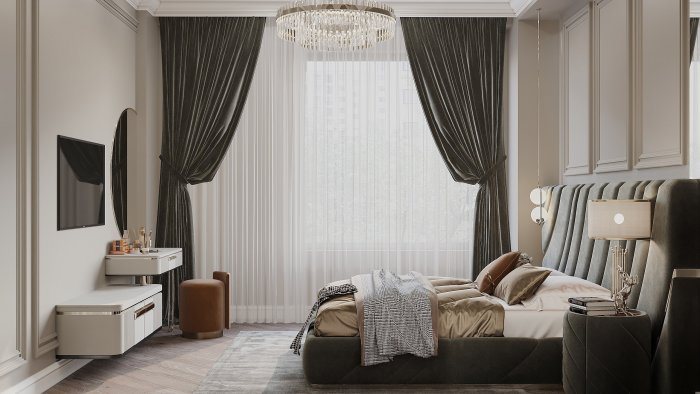
In a bedroom, an upholstered panel is often planned as an extension of the headboard. If the panel is wider than the bed, the bedside tables and wall lights sit inside the composition and the wall reads as one piece. Taking the panel up to the ceiling makes the room feel taller, while stopping it at bed height gives a calmer, more compact effect.
Practical questions matter here:
- if reading lights are mounted on the panel, the cable outlets must line up with the panel layout;
- sockets and switches beside the bedside tables need extension frames that allow for the panel's thickness;
- where heads rest, a darker or stain-resistant fabric is the practical choice;
- fixing panels with a removable system makes cleaning or replacing the cover much easier.
In a home cinema or media room
In a home cinema, upholstered panels are part of both the design and the acoustics. The wall opposite the screen and the first reflection points on the side walls are usually treated first. This helps dialogue sound clearer and stops sound from smearing around the room.
Keep in mind that soft panels mainly affect mid and high frequencies. Low bass needs dedicated acoustic treatment, and insulation from neighbours depends on the wall and ceiling construction itself. Panels do not replace these; they complete the room's internal acoustics.
Dark, matt, non-reflective covers are also preferred in a cinema room, because shiny surfaces bounce light from the screen back into the room.
Covering every square metre of wall does not always give a good result. A fully deadened room sounds lifeless and muffled, which is especially noticeable with music. Hard and soft surfaces are usually alternated: a soft band at ear height on the side walls, with painted or timber finishes above and below. On the rear wall, diffusing elements such as bookshelves can sit between the panels. It is sensible to fine-tune this balance with an acoustics specialist according to the room size and the sound system.
Choose materials with fire safety and care in mind
Textiles and foam covering a large area deserve attention from a fire-safety point of view. Ask for the manufacturer's documentation on how the materials behave in fire, and keep panels away from heat sources such as fireplaces and powerful lamps. Any wiring running behind them should be in protective conduit.
For care, velour and velvet collect dust but clean well with a soft brush or vacuum. Faux leather wipes clean with a damp cloth but can be damaged by harsh chemicals. In a child's room or a home with pets, scratch-resistant fabrics are the wiser choice.
Installation sequence
Upholstered panels belong to the final finishing stage, but preparation starts much earlier. The wall must be flat, because any unevenness shows at the joints between panels. Electrical points are positioned during rough works according to the panel layout. Panels go up after painting and flooring are finished so they are not soiled by dust and paint.
Zaferoğlu İnşaat helps choose material combinations and colour palettes when designing bedrooms and media rooms, and shows wall solutions in advance with computer models. Curious how a padded wall would look in your bedroom? Let us know.
News