
Plaster Ceiling Decor: Roses, Cornices and Mouldings
The role of plaster ceiling roses, cornices and mouldings in an interior, plaster versus polyurethane, scale and proportion, installation and restoration.
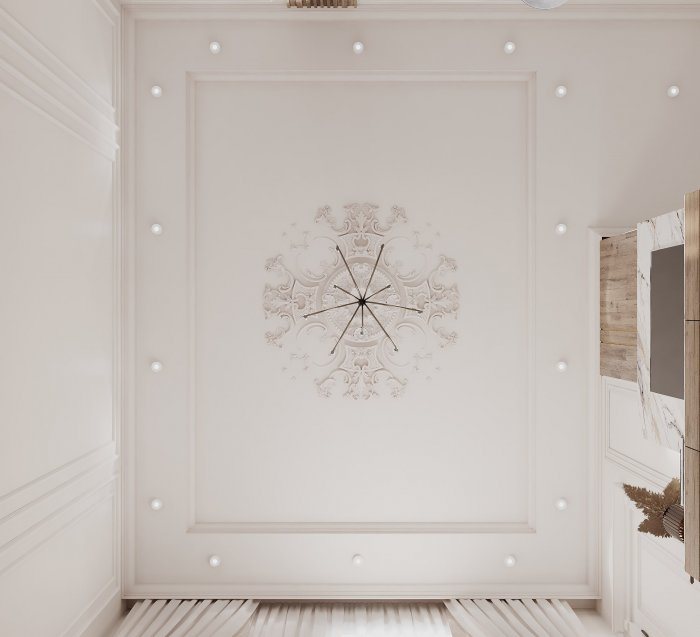
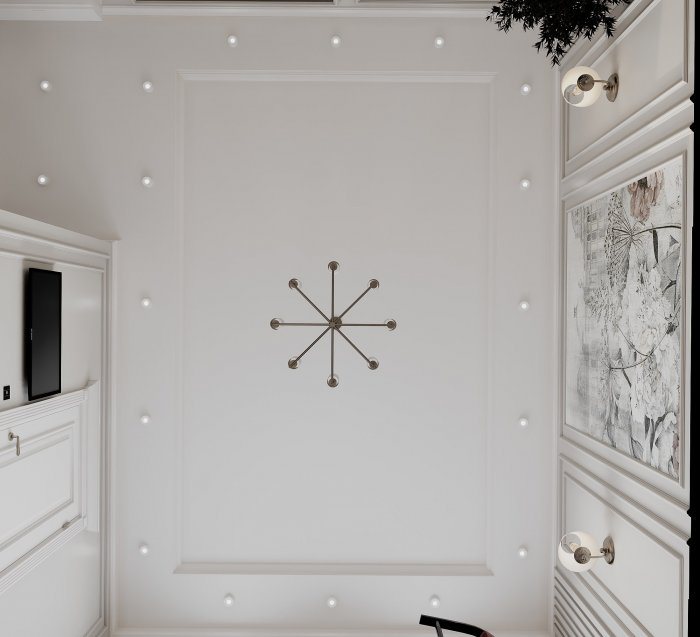
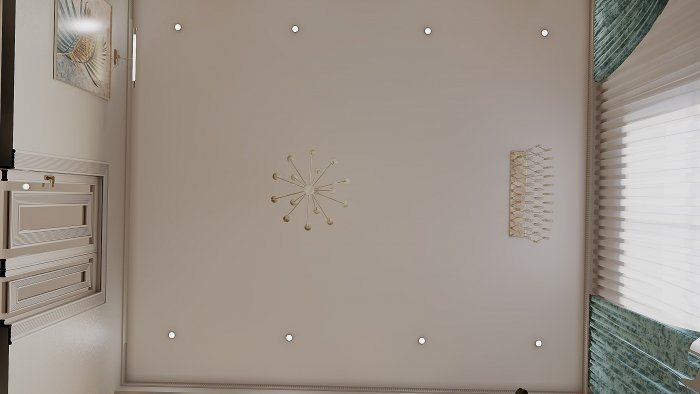
Ceiling roses and cornices instantly signal a classic or neoclassical interior. A cornice softens the junction of wall and ceiling, a ceiling rose frames the chandelier, and mouldings divide a flat ceiling into panels and give the room rhythm. Well-chosen decor brings a sense of completeness and elegance. When proportions are wrong, the same elements make an interior look heavy and artificial.
Decorative elements and their roles
The main elements of ceiling decor are:
- cornice: a profiled element running along the corner where ceiling meets wall;
- ceiling rose: a round or oval ornament where a chandelier or pendant is fixed;
- ceiling moulding: a slim profile forming frames, panels or geometric patterns on the ceiling;
- frieze: an ornamental band along the top of the wall beneath the cornice;
- corner pieces and medallions: details decorating the corners of moulding frames.
These elements should be chosen as a system, not individually. When the profiles of the cornice, door architraves and skirting speak the same stylistic language, the interior feels coherent.
Plaster or polyurethane
Traditional decor is cast in plaster. Plaster gives crisp, deep and finely detailed ornament, takes paint well and does not burn. It is the material of choice for restoring historic buildings and for high-end classic interiors. Its drawbacks are weight, fragility and the greater skill required to install it.
Polyurethane decor is light, resists knocks and moisture, is simple to install and comes in a wide range. It is widely used in modern apartments and neoclassical interiors. However, detail on polyurethane is often less sharp than on plaster, and fine lines can appear at joints between long lengths because of thermal movement.
The choice depends on the level of the interior, humidity in the room and budget. In humid rooms such as bathrooms, polyurethane is more reliable.
Scale and proportion
Size is where decor most often goes wrong. The general principle is simple: the higher the ceiling and the larger the room, the larger the cornice can be. In a room of standard height, a large multi-stepped cornice lowers the ceiling and makes the room feel cramped. In a tall reception room, a slim cornice simply disappears.
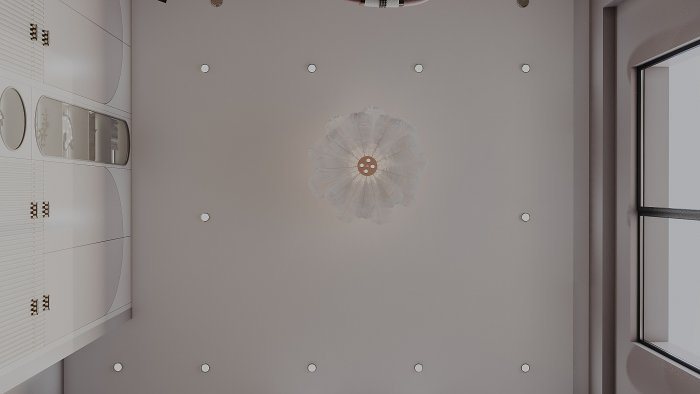
The diameter of a ceiling rose is related to the size of the chandelier. When the chandelier is much larger than the rose, the rose is hidden; a very small chandelier is lost against a large rose.
There is a practical way to check proportion: cut a full-size cardboard template of the cornice profile and hold it against the ceiling, or view it within the whole room in a computer model. A catalogue photo gives no sense of scale.
Installation order
Decor is installed after walls and ceiling have been plastered and levelled, and before the final coat of paint. The main rules:
- ceiling and wall surfaces must be clean, dry and primed;
- elements are fixed with the adhesive recommended by the manufacturer, and heavy plaster pieces need additional mechanical fixing;
- cornice corners are joined with precise mitres or ready-made corner pieces;
- joints and screw holes are filled and smoothed;
- finally the decor is painted together with walls and ceiling.
Before a ceiling rose is installed, a hanger anchored to the concrete and the cable outlet for the chandelier must be ready. The rose is decorative and does not carry the chandelier's weight.
Plaster and polyurethane decor can also be combined with a plasterboard ceiling. In that case the edge framing and bonding zone are planned in advance, and additional studs are provided for heavy elements.
Colour and light
Ceiling decor is usually painted the same white as the ceiling, with its form read through light and shadow. In classic interiors, the deeper parts of the ornament are sometimes picked out a shade darker or with gilded details; this should be used with restraint, since too much colour can make decor look cheap.
Concealed LED lighting behind a cornice makes the ceiling appear to float higher. For this, the cornice is set a certain distance from the wall, leaving an open gap for the light.
Restoring old decor
In older buildings, plaster decor has often lost its detail under many layers of paint, and in places it may be cracked or broken away. Restoration starts by softening and removing old paint layers, then filling damaged areas with plaster mix. Missing fragments are recast from moulds taken from surviving sections.
This work demands patience and experience, but it preserves the original character of a historic interior. Removing restorable decor and replacing it with standard polyurethane pieces can reduce the value of the room.
In its classic and neoclassical interior projects Zaferoğlu İnşaat develops ceiling decor as a complete moulding system and shows it in a computer model. Share your ceiling height and we can suggest cornice and rose sizes that suit it.
News