
Shell, White Box and Finished Apartments: The Differences

What the three terms you hear when buying in a new build really mean, what work is left in each case and what to check at handover.
When choosing an apartment in a new development, buyers often come across three expressions: shell, white box and finished. These are not precisely defined legal standards but terms that have grown up in the market. The same word can therefore mean a different scope of work from one development to another. When buying, look not at the label but at the specific list of works written into the contract.
Shell: the structure only
A shell usually means the building's structure is complete but no finishing has been done inside the unit. The external walls and window openings are there, sometimes windows are installed, and the floor is a bare concrete slab. Internal partitions are either missing or exist only as bare masonry.
In this state, building services are often brought only to the entrance of the flat: water and drainage risers, an electrical board, sometimes a heating line. Distributing them inside the flat is the buyer's responsibility.
The advantage of a shell is freedom of layout. Since nothing has to be demolished, the buyer can position rooms, kitchen and bathroom to suit their needs. The drawback is that this is the longest and most labour-intensive route to a finished home.
An initial survey matters with a shell too. Level differences in the concrete slab, cracks in walls, the size of window openings and the position of risers are measured, because they determine later screed thickness, the amount of plaster and where a bathroom can go.
White box: a base ready for finishing
A white box is a more advanced stage. Typically, partitions are built, walls are plastered, a screed is poured, electrical wiring is run, and water and drainage points are brought out. The flat is handed over as a base ready for final finishing: paint, floor finishes, tiles, sanitary ware and doors are left to the buyer.
With a white box, attention should focus on the quality of the work already done. Uneven plaster, an inaccurate screed or electrical points that do not match your layout will have to be corrected, which adds to the renovation. Sometimes a buyer who wants a different layout has to demolish partitions that are already built.
Finished apartment: ready to move in
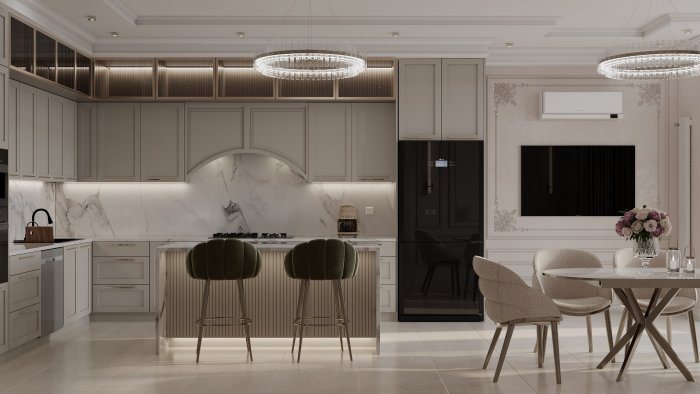
A finished apartment is handed over with finishing completed and sanitary ware and lighting installed. In some developments the kitchen units and appliances are included. This option takes the least time and lets you plan your move-in date precisely.
However, in a finished apartment the class of materials and the design choices do not depend on the buyer. A standard solution does not suit everyone, and changing it later means another refurbishment. It is also hard to check the quality of the concealed work behind the visible finish.
In such a flat the buyer should at least ask for layouts of the electrical and plumbing routes, a list of the materials used and the warranty documents for the equipment. These papers will be the basis both for future renovation work and for any claim if defects appear.
Which option suits whom
- A shell, for those who want to create their own layout and choose all materials themselves.
- A white box, for those who want to save time but still pick the finishes.
- A finished apartment, for those who plan to move in quickly or rent the flat out.
When choosing, consider the whole renovation process, not just the purchase. For a shell unit, design, buying materials and carrying out the work can take months, and the cost of living elsewhere during that time should be factored in.
A white box carries a hidden risk: the electrical and water points already installed may not match your furniture plan. Before buying such a flat, it pays to check the likely position of the kitchen, bathroom and bedroom on the plan and see in advance which points would have to be moved.
What to check at handover
Whatever the state of the flat, these points are checked on acceptance:
- whether the works listed in the contract have actually been done;
- the flatness of wall and floor surfaces;
- how well windows seal and how their mechanisms work;
- the electrical board, meters and number of circuits;
- the position of water and drain outlets and any signs of leaks.
Any defects found must be recorded in the handover certificate. For a white box or finished flat, the developer's warranty terms for defects that appear later should also be clarified in advance.
Zaferoğlu İnşaat carries out apartment renovations in new buildings and prepares layout and design projects. Show us how the contract describes the flat, shell, white box or finished, and we can list the work still to be done.
News