
Safe Materials for Renovating a Child's Room
A material's safety is not measured by a word on the label. Practical selection criteria for paint, flooring, walls, electrics and ventilation in a child's room.
Daily life in a child's room is different from the other rooms in a home. Children play on the floor, touch the walls, put things in their mouths and spend a large part of the day indoors. That is why renovation materials should be chosen carefully, both for what they release into the air and for mechanical safety. A label saying "eco" or "for children" is not enough on its own; you need to look at the product documents and how it should be applied.
Paints and wall finishes
Walls are the largest surface in the room, so the composition of the paint directly affects indoor air. Water-based paints with a low content of volatile organic compounds are the preferred choice. Look for this figure, the intended use and conformity certificates on the label and in the technical data sheet.
Walls in a child's room must be washable: pencil, modelling clay and hand marks are inevitable. Scrub-resistant matt or eggshell paints are practical here. If wallpaper is chosen, paper or non-woven backed products with water-based adhesive are the more sensible options.
Decorative plasters and raised textures should not have sharp protrusions. Surfaces that can scrape skin when a running child brushes past are not suitable for this room.
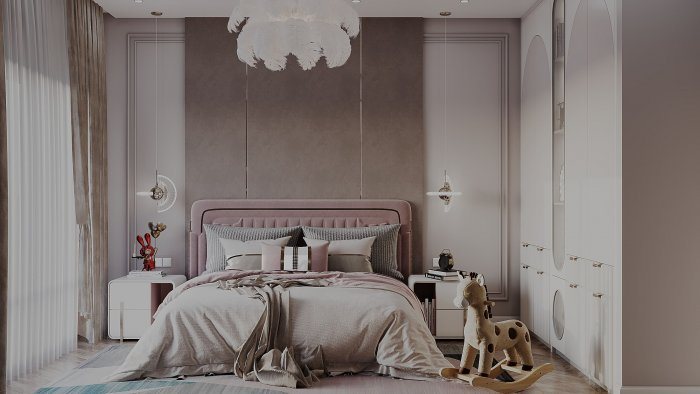
Colour choices also depend on the child's age. Very bright, saturated colours may look fun for a small child but can be tiring in a room used for sleep. A calm base with one accent wall or colourful accessories is easy to change as the child grows.
Flooring: warm, non-slip, easy to clean
In a child's room the floor is a play area. It matters that the finish feels warm, does not slip and softens the impact of a fall a little. Parquet, good-quality laminate or naturally based coverings are frequent choices. Whatever the material, its emission class and the composition of the adhesive should be checked.
After the floor finish is installed, it is advisable to air the room for several days. For timber surfaces treated with lacquer or oil, the drying and full curing time stated by the manufacturer must be respected.
If a rug is used, it should be washable or easy to remove for cleaning, because dust and allergens collect mostly in soft surfaces. If underfloor heating is installed, the floor finish's compatibility with the system is checked separately in the manufacturer's documents.
Electrical safety
The position and type of sockets are planned specially in a child's room. Sockets with shutters stop a small child from pushing a finger or an object inside. Placing sockets where they are actually needed, rather than behind the bed head, reduces extension leads lying around on the floor.
Make sure the child's room is on a circuit with both a circuit breaker and RCD protection. A separate low point for a night light is provided, as well as task lighting at the desk that does not strain the eyes.
Mechanical safety and fixings
As children grow they climb shelves and hang on wardrobe doors. Heavy furniture must therefore be fixed to the wall, and that requires a solid base in the wall. In plasterboard partitions, these points are reinforced from inside during the renovation.
Other important points:
- window restrictors or locks that limit opening;
- solutions that prevent fingers being trapped in doors;
- curtain and blind cords kept out of a child's reach;
- no sharp corners, or corners that are softened.
Drying, ventilation and moving in
Most renovation materials release odours and substances into the air for some time after application. Rather than moving the child into the room on the day the renovation ends, it is better to give the room a period of intensive airing. How long depends on the materials and the season; sleeping in the room before the smell has completely gone is not advisable.
Daily ventilation of the room is a continuation of the renovation. A window's micro-ventilation setting or a trickle vent helps prevent damp and mould.
A checklist for choosing materials
- Is there a technical data sheet and a conformity document?
- Is the material intended for living rooms?
- Can the surface be washed and disinfected?
- How long are the drying and airing times?
- What does the manufacturer say about odour and emissions?
Zaferoğlu İnşaat helps clients choose material combinations and colour palettes as part of apartment renovations. Contact our designers to plan the renovation of your child's room.
News