
Ceiling Colour: When Something Other Than White Works
How painting a ceiling a colour other than white changes a room’s sense of height, its light and its mood, when it succeeds and what to watch out for.
A white ceiling is often chosen without a second thought, and for good reason: it reflects light well, goes with any colour and leaves little room for error. Yet the ceiling is a room's "fifth wall", and its colour noticeably changes the room's height, light and mood. Used in the right place, a coloured ceiling gives an interior a finished feel.
How colour changes height
Light, cool shades read as further away; dark and warm shades feel closer. So a pale ceiling makes a room feel taller, while a dark one makes it feel lower and more enclosed. That rule can work against you or for you.
In a tall but narrow room, making the ceiling slightly darker than the walls brings it down visually and makes the space feel better proportioned. In a low room, painting the ceiling the same light colour as the walls softens the corner line so the boundary is less noticeable. Sometimes carrying the ceiling colour a little way down the wall — to a moulding or a narrow band — also corrects the room's proportions.
Light and reflection
The ceiling is the main reflecting surface in a room, especially where concealed lighting is aimed upwards. A dark ceiling absorbs a large share of that light, and with the same fittings the room looks darker. That may be welcome in a bedroom or home cinema but becomes a nuisance in a room with a desk.
A coloured ceiling also tints the light it reflects. A warm beige or pale terracotta ceiling sends soft, warm light back into the room; a cool grey-blue cools it. For this reason the ceiling colour should be checked together with the colour temperature of the lamps.
Where a coloured ceiling fits
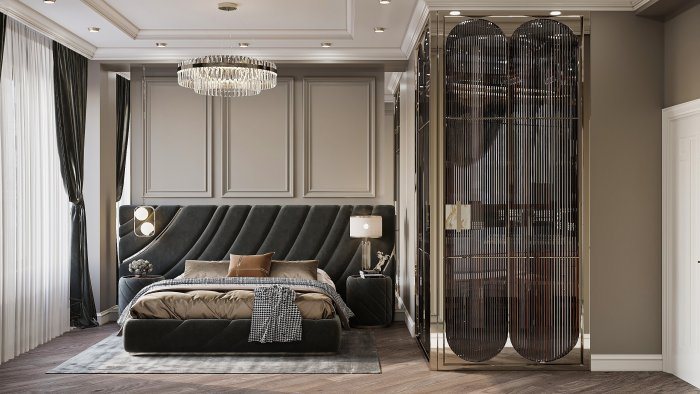
- Bedrooms: a calm, deep shade on the one surface you see while lying down creates a sense of comfort.
- High-ceilinged living or dining areas: colour on the ceiling helps pull the space together and make it more intimate.
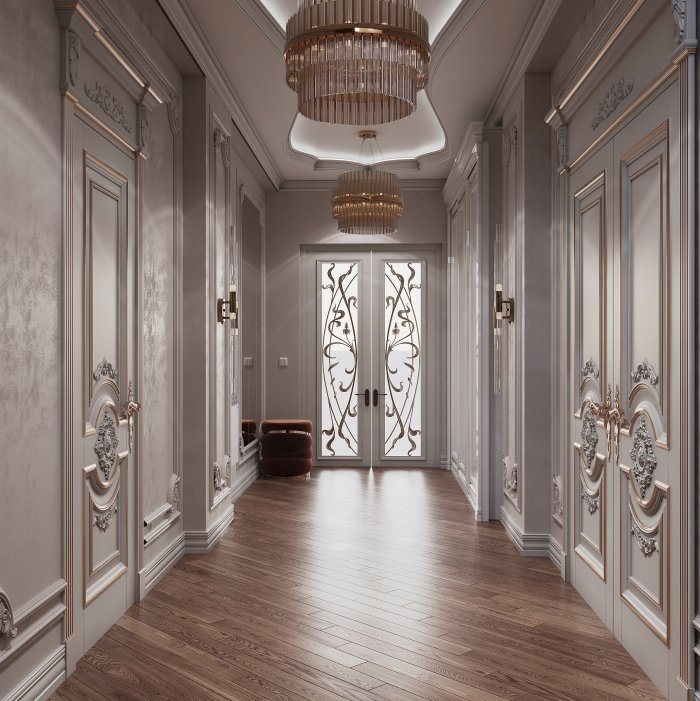
- Hallways and small transition zones: a bold colour makes a brief impression here without tiring the rooms.
- Timber beams, coffers or relief ceilings: the background colour brings the detail itself forward.
- Terraces and covered balconies: a pale blue or greenish tone creates a link with the open sky.
Risks and the technical side
Ceiling defects show more under coloured paint than under white. In side light, filler marks, plasterboard joints and slight undulations stand out clearly in dark and glossy finishes. That is why matt or very low-sheen paint is preferred for coloured ceilings, and the surface is prepared more carefully.
A dark ceiling is also harder to paint evenly: the risk of patches and lap marks rises, and an extra coat is sometimes needed. Where ceiling and wall colours differ, the dividing line must be perfectly straight; careful masking or a slim moulding at the colour break helps keep it neat.
Remember too that returning a dark ceiling to white later can take several coats. The decision should rest on long-term comfort rather than a passing trend.
Balancing ceiling, walls and floor
A coloured ceiling never works alone; it works together with the room's two other large surfaces. With light walls and a mid-tone floor, a soft ceiling colour has an enveloping effect. If the walls are dark as well, keeping the ceiling in the same tone makes the space read as one enclosed box — interesting for a library or study, but oppressive in a small room.
A simple approach avoids a muddle: take the ceiling colour a few steps lighter or darker within the same hue as the walls. The transition then stays soft and the room does not collect too many different colours.
Test before you choose
A small swatch from a paint card looks completely different on a ceiling, because the ceiling sits in shadow and receives light from another angle. Before deciding:
- paint a large sample board and hold it close to the ceiling;
- check the sample by day, at dusk and with the lamps on;
- judge it together with the wall colour, the floor and the main textiles;
- check the ceiling surface with side light and plan extra preparation if needed.
Seeing in a 3D visualisation how a coloured ceiling will look in the room reduces the risk of a wrong choice. As part of its design service, Zaferoğlu İnşaat presents colour solutions in the model together with lighting and materials.
News