
Ceiling Design for a Child's Room: Calm, Safe Solutions
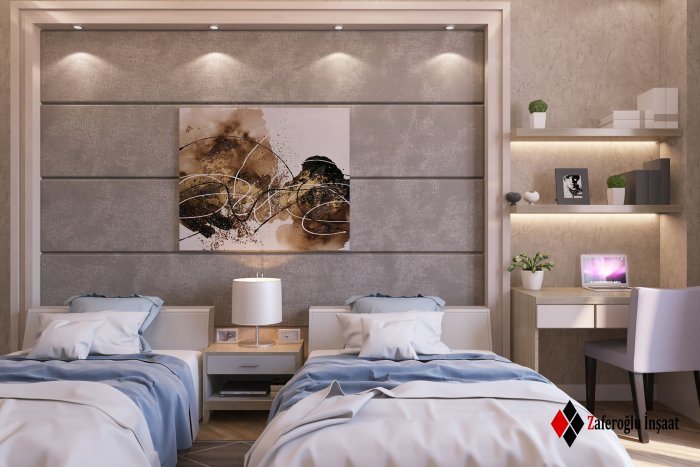
How to design the ceiling of a child’s room: light that does not disturb sleep, calm colour, safe fixings, sound control and solutions that can change as the child grows.
In a child's room the ceiling is often imagined as a play surface: a starry sky, clouds, brightly coloured shapes. These ideas are appealing, but the child looks up at that ceiling every night while falling asleep. A good ceiling combines imagination with calm, safety and a simplicity that can adapt over the years.
The ceiling starts from the sleeping area
The position a child spends most time in within their room is lying down. So the ceiling should be judged not from the doorway but from the bed. A bright chandelier, a strong spotlight or a high-contrast pattern directly above the bed can make it harder to fall asleep.
Practical rules:
- move the main light source away from the spot directly above the bed;
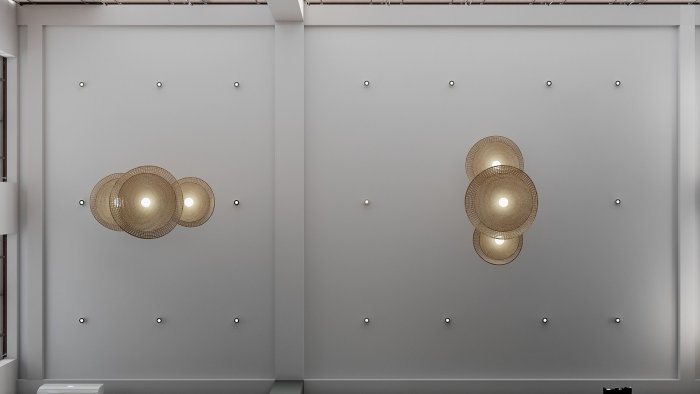
- choose indirect, soft light in the sleeping zone, such as light bounced from a ceiling recess or from a wall upwards;
- plan a separate, very dim, warm night light;
- provide light controls both at the door and beside the bed.
Colour and pattern: less is more
A saturated colour across the whole ceiling can make a room feel heavy and overstimulating. Pale, soft shades — warm white, light beige, very faint blue or green — create a calm background. If a colour accent is wanted, it is better placed over a small zone above the bed or on part of the ceiling rather than all of it.
Children's interests change quickly. The character they love today will seem babyish in a few years. Instead of painting a complicated, hard-to-change picture on the ceiling, carrying the theme through removable wall elements, textiles and accessories makes the room easy to refresh. The ceiling stays neutral and suits every age.
Safety: everything that hangs must be secure
Items suspended from the ceiling in a child's room — light fittings, decorative figures, a swing or a hanging chair — need special care. Plasterboard on its own cannot hold much weight. For such loads, fixings go directly into the structural slab, or a reinforced point is built into the frame in advance.
Other important points:
- light fittings should have no glass or fragile parts, or these should be well protected;
- no heavy decoration should hang above the bed;
- paints and materials used on the ceiling should have documentation confirming they are suitable for living spaces;
- if a bunk bed or raised play area is planned, check the distance from the upper level to the ceiling and the light fittings there.
Acoustics and quiet
A child's room is a place for both play and sleep. Hard, smooth surfaces reflect sound and make the room noisier. Acoustic panels on the ceiling, or a suspended structure filled with sound-absorbing material, reduce echo inside the room and soften noise from neighbouring rooms.
If the child's room sits next to the parents' bedroom or the living room, sound insulation cannot be solved through the ceiling alone; walls and doors have to be considered too. The ceiling is an important part of that system, but only one part.
Cleaning should also influence the acoustic choice. Dust and marks are inevitable in a child's room, so the ceiling panel surface should be wipeable or easy to repaint. Open-textured, soft finishes absorb sound well but collect dust and may not suit children prone to allergies. In that case solutions with a smooth face and a sound-absorbing backing, such as perforated plasterboard panels, are more practical.
Ventilation and temperature
The ceiling also shapes how air moves. An indoor air-conditioning unit or a ventilation grille should be positioned so that cold airflow does not fall directly on the bed. If a ducted system is planned, supply grille positions are fixed in the ceiling design from the start and moved away from the sleeping area, usually towards the window side or the entrance. Airflow noise matters in a child's room too: equipment with a quiet mode and correctly sized grilles reduce noise at night.
A ceiling that grows with the child
A well-planned ceiling works from a newborn's nursery to a teenager's room. To achieve that:
- plan lighting circuits so they can also reach a future desk and reading corner;
- keep the main structure simple and neutral, and leave decoration to changeable elements;
- build in one or two reinforced fixing points in advance;
- plan dimming so there are different settings for play, homework and sleep.
When renovating children's rooms, Zaferoğlu İnşaat plans ceiling, lighting and acoustic solutions with the room's future changes in mind.
News