
Colour and Texture for Small Rooms Without Crowding Them
In a small room colour and texture either open the space up or close it in. A light background, low contrast, considered textures and good lighting make a small room comfortable.
The most common advice for small rooms is “paint everything white”. White does reflect light well, but white walls alone do not automatically make a small room feel larger. How we perceive space depends not only on colour tone but also on contrast, surface sheen, texture and how light is distributed. These elements need to be managed together.
Light colours, but not sterile
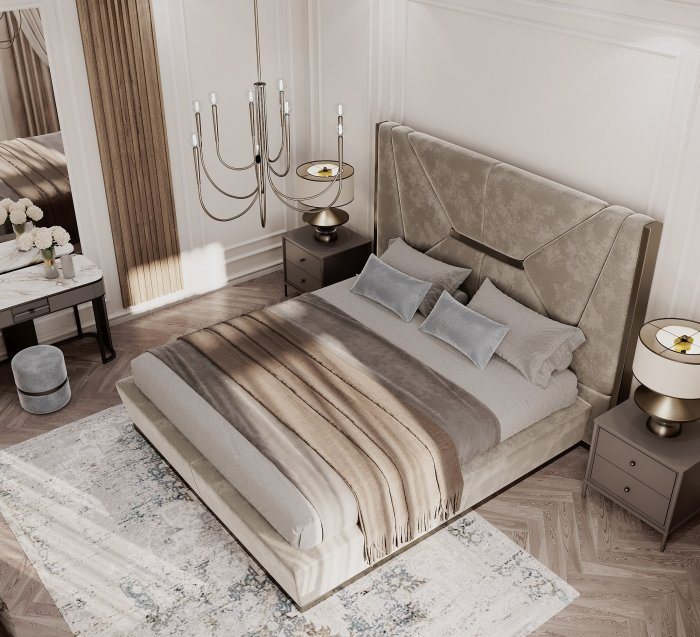
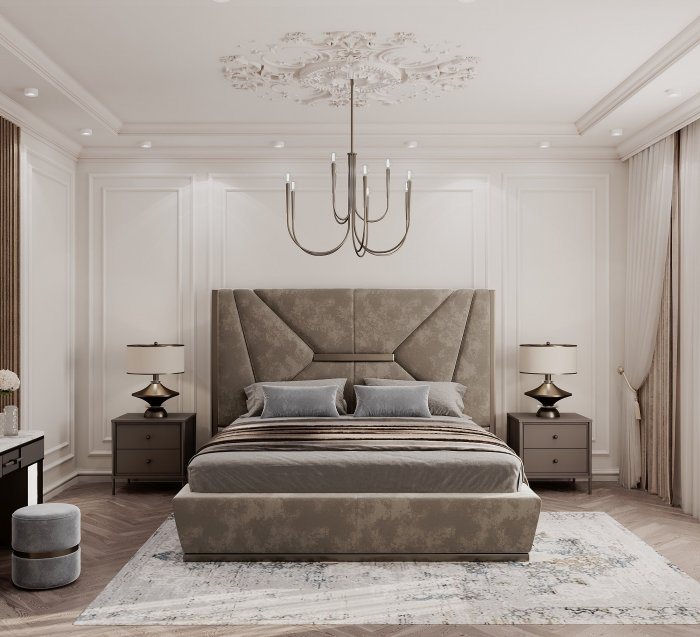
Light tones reflect more light and make walls visually recede. However, a cold, bright white can look greyish and dull in a poorly lit room. Warm white, ivory, pale sand, very light grey-beige or soft pastels create a more comfortable background.
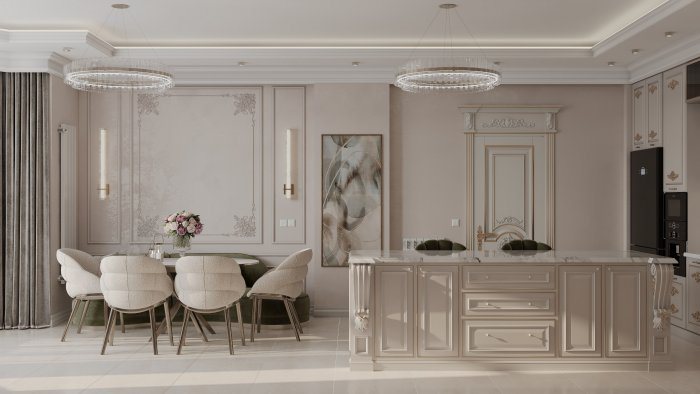
The smaller the colour difference between walls and ceiling, the less the room's boundaries are felt. Painting the ceiling one shade lighter than the walls, or the same colour, adds a sense of height. A stark white ceiling over dark walls makes the ceiling feel lower.
Reducing contrast
The more edges the eye sees in a small room, the more fragmented the space becomes. A dark skirting, a contrasting door frame, window reveals in a different colour, lots of patterns — each creates a visible line.
Ways to reduce contrast:
- choose skirting, door frame and door in the wall colour or a close tone;
- hang curtains in a fabric close to the wall colour;
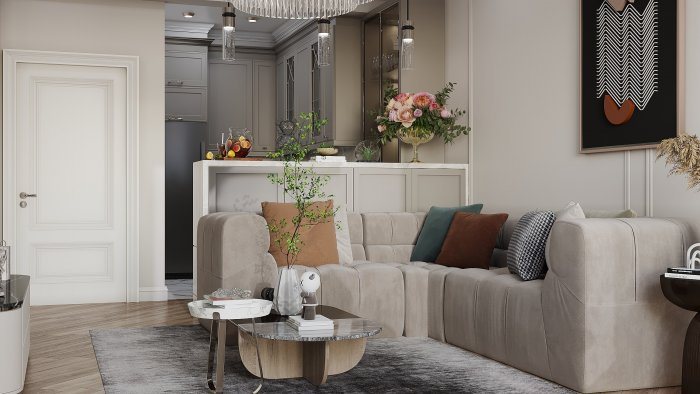
- select large furniture in the same or a similar colour to the background so it blends into the wall;
- gather the accent in one place — one wall, one armchair or one artwork.
This does not mean a small room must be monochrome. It simply means contrast points should be few and deliberate.
Dark colours can work too
Paradoxical as it sounds, dark colour succeeds in some small rooms. Walls painted deep blue, green or graphite make corners disappear, blur the room's boundaries and give an intimate, deep feel. This approach suits a small study, a reading nook or a guest toilet particularly well.
Dark colour needs two conditions to work: good artificial lighting and a limited number of contrasting elements. Many light-coloured objects on a dark wall look like spots.
Matt and gloss surfaces
Glossy surfaces reflect light and create an illusion of depth. A gloss kitchen front, a lacquered panel or a mirror can help in a small room. But gloss wall paint reveals every tiny surface defect, and reflected light can tire the eyes.
A practical balance: matt or satin paint on the walls, with one or two glossy surfaces in furniture and decorative details. This combination spreads light while keeping a calm background.
Texture: fine and one-directional
Texture should not be ruled out in a small room — a space without texture can look like a cardboard box. But large, raised patterns, coarse decorative plaster and heavy fabrics visually shrink the volume.
Fine textures are the right choice: linen-effect wallpaper, light decorative plaster, slim slatted panels, pale wood. Vertical lines (narrow slats, vertical stripes) make the ceiling look higher, while horizontal lines stretch a wall. Choose the direction according to which dimension of the room you want to enlarge.
The same logic applies to floors. Large-format tiles or wide boards create fewer joint lines. Laying the flooring along the long side of the room and continuing the same material into adjoining rooms makes the space read as one.
Light is colour's partner
Even the best-chosen colour makes a small room feel cramped in poor light. A single central lamp leaves the upper walls and corners in shadow. Light aimed at the walls, a concealed strip in the ceiling cornice or wall sconces illuminate surfaces and push the room's boundaries outwards.
Keeping windows as clear as possible, choosing light fabrics instead of heavy drapes, and using ceiling-mounted curtain tracks increases daylight.
Before finalising, run a quick check:
- is there a sharp colour difference between walls and ceiling;
- are there no more than two or three contrast points;
- is the texture fine enough for the size of the room;
- does light fall on the walls, not only from the centre.
For compact apartments and rooms, Zaferoğlu İnşaat works out colour, material and lighting solutions together in the design project and presents them in computer models. The choices can be checked at the real dimensions of your room.
News