
Classic vs Neoclassical Interiors: How to Tell Them Apart
Classic and neoclassical interiors share the same roots but differ in the amount of decoration, colour, materials and everyday practicality. The main criteria for choosing.
At a first meeting with a designer, clients often say they want “something classic”. As the conversation goes on, it turns out that some are picturing a palace interior with gilded ornament and heavy drapes, while others imagine a light, calm room with mouldings. The first is closer to classic style, the second to neoclassical. Knowing the difference helps you express what you want precisely and make choices that fit your budget and space.
Shared roots: order and proportion
Both styles rest on rules inherited from ancient architecture and European palace interiors. Symmetry, a central axis, correct proportions, cornices, skirtings and wall panels appear in both classic and neoclassical rooms. That is why they are easy to confuse at first sight.
The difference lies in how much detail there is, how heavy it is and how open the space is to everyday life. A classic interior puts itself on display; a neoclassical one keeps the order but calms down.
Decoration: richness or restraint
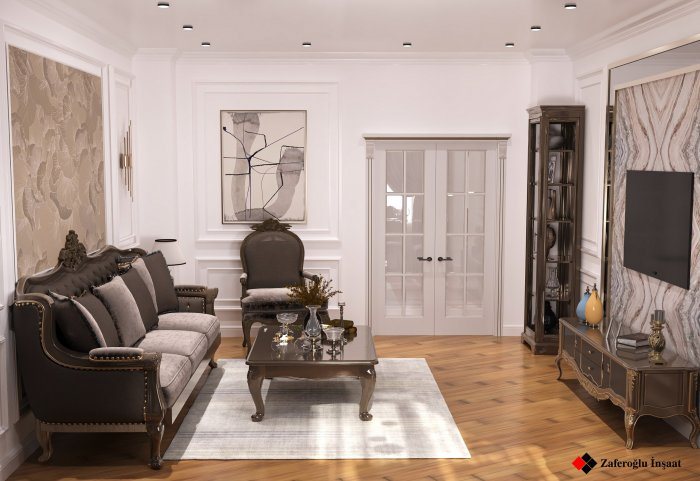
In a classic interior decoration is layered. The ceiling carries sculpted roses and coffers, walls have ornamented panels, pilasters and sometimes columns, with carved details and gilded elements. Almost every surface is decorated in some way.
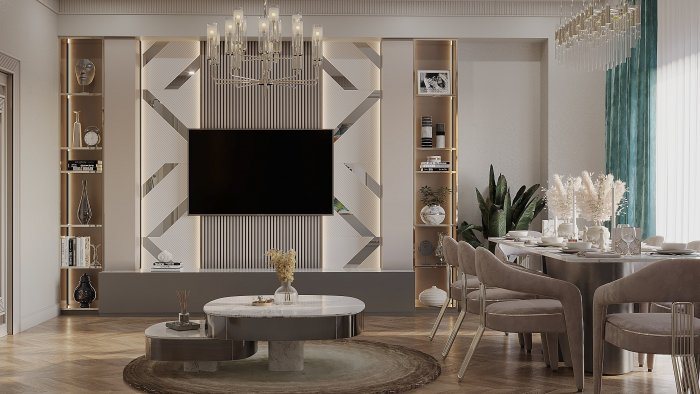
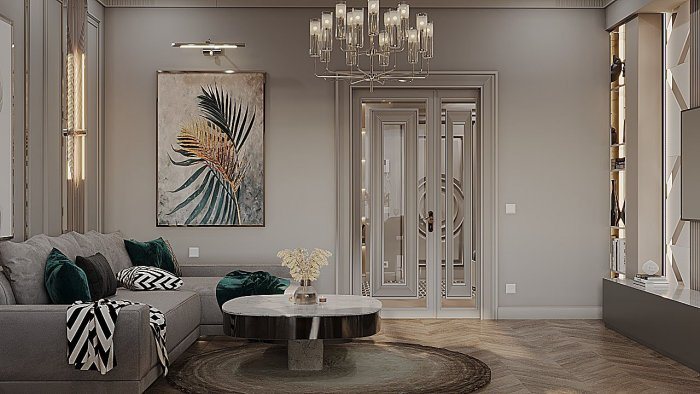
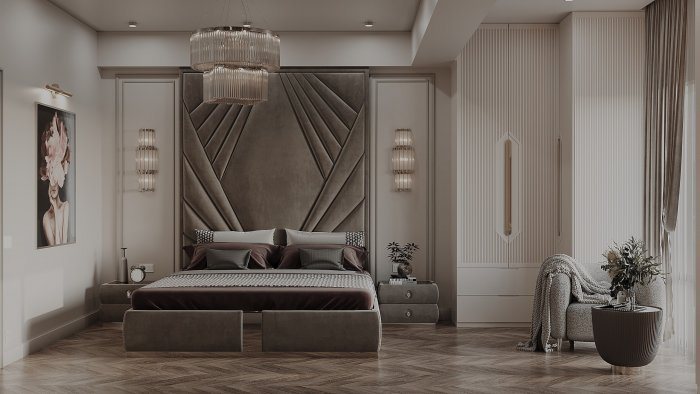
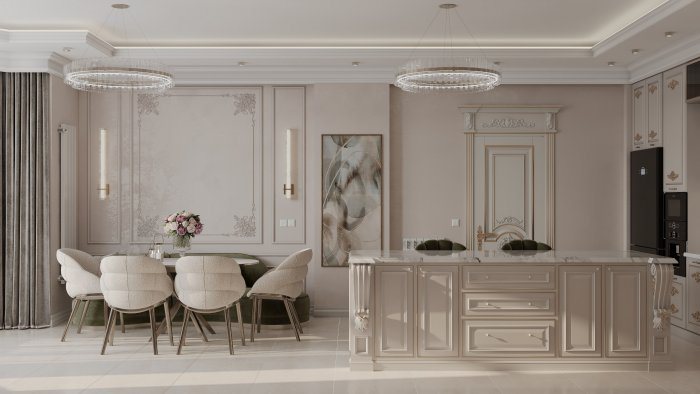
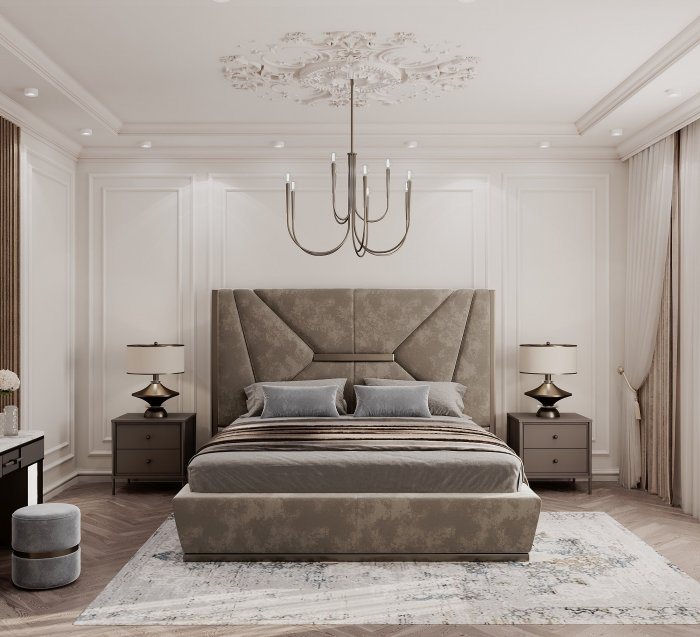
Neoclassicism simplifies the same elements. The cornice stays, but with a more compact profile. Wall panels are there, but their centres are empty and clean. A ceiling rose is either very plain or omitted altogether. Instead of gilded ornament, brushed metal or simply the light and shadow of the relief does the work.
A simple test: count the decorative details in the room. If the eye moves from one ornament to the next without resting, it is classic. If the background is calm and only one or two elements draw attention, it is closer to neoclassical.
Colour and materials
Classic interiors lean towards deep, rich colours: burgundy, dark green, chocolate, gold and ivory. Fabrics are heavy — velvet, brocade, damask. Wood comes in dark tones, polished or lacquered, and marble is often used on both floors and walls.
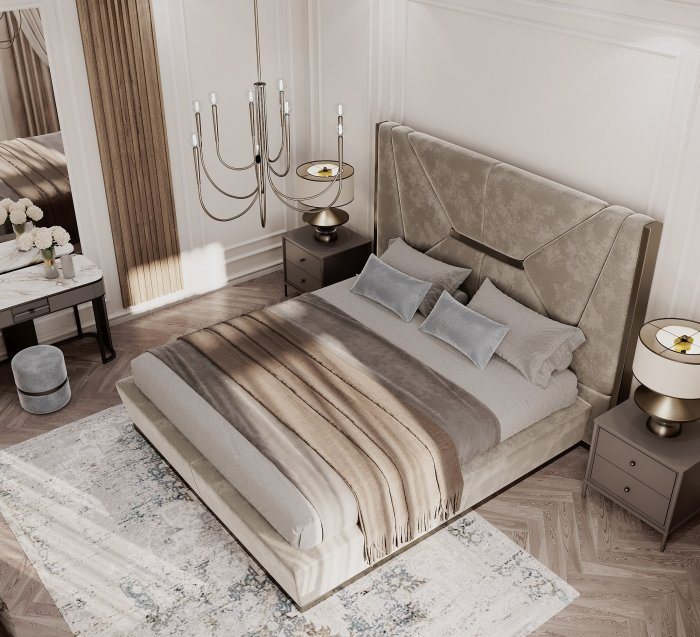
Neoclassicism prefers a lighter palette: beige, sand, pale grey, white, pastel blue and green. Fabrics are lighter — linen, cotton, soft velvet. Wood is often pale or painted, and marble appears as an accent on a fireplace surround, a console or in the bathroom.
Furniture silhouettes and objects
Classic furniture has carved legs, curved lines and often decorative upholstery. Armchairs and sofas have tall backs and patterned fabric. Mirrors in heavy frames, large chandeliers, porcelain vases and paintings complete the character of the space.
In neoclassical rooms furniture shapes recall their classical source but are simplified: legs are straight or gently curved, carving is kept to a minimum and upholstery is plain. A chair with a classical silhouette next to a simple contemporary table is natural in neoclassicism, whereas in a classic interior such a pairing would look out of place.
Which style suits which space
A classic interior needs generous floor area and high ceilings. Heavy cornices, columns and large chandeliers only breathe when there is enough volume. For a villa reception hall, a formal meeting room in an office or a private dining room in a restaurant this style can make sense.
Neoclassicism is more versatile. It sits comfortably in an apartment with standard ceiling height because the decoration does not overload the space. It is also practical for families with children: a light background and simple surfaces are easier to clean and maintain.
When deciding, consider:
- whether the ceiling height and room size can carry heavy decoration;
- whether the home is mainly for everyday living or for receiving guests;
- how much time you are ready to spend cleaning carved, gilded or relief surfaces;
- whether the interior will become tiring over the years.
Avoiding muddled solutions
The most common problem is a random mix of the two styles: a few heavy classic pieces on a light neoclassical background, or modern, overly plain elements in a classic hall. Such interiors look unfinished. Keeping the chosen direction consistent across all rooms and varying only the intensity of decoration from room to room gives a far more successful result.
Zaferoğlu İnşaat develops classic, neoclassical and modern interior solutions with sketches and computer models. Which direction suits your space can be compared through visual options.
News