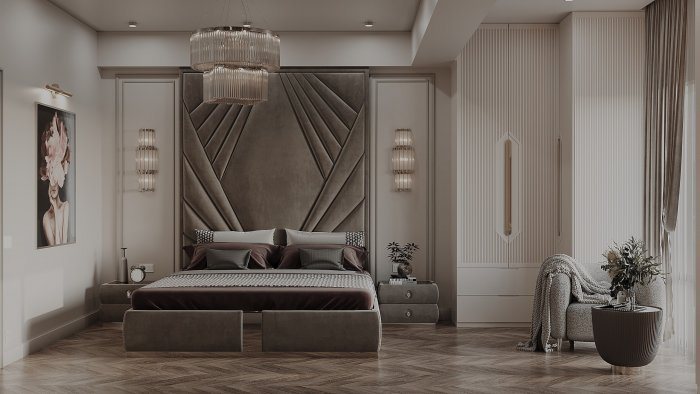

Neoclassical Interiors: Mouldings, Colours and Balance
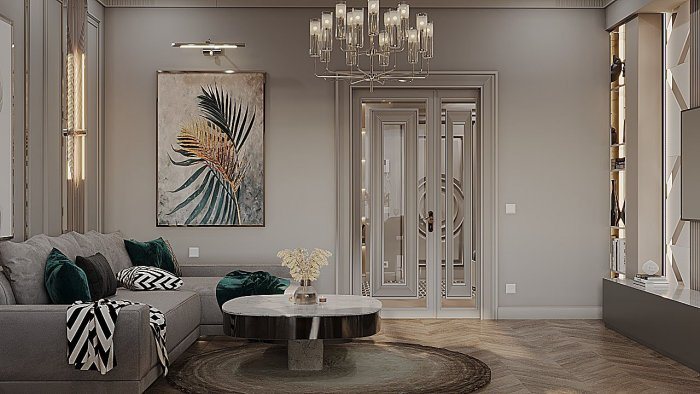
A neoclassical interior keeps the symmetry and proportions of classical design but lightens the decoration. Mouldings, calm colours and modern practicality form its base.
The neoclassical style is a natural choice for people who love the order of classical architecture but do not want palace-level grandeur. It gives up columned halls and gilded ornament yet keeps correct proportions, symmetry and refined detail. The result, in an apartment or a villa, is an interior that is comfortable for daily life and still looks dignified.
Core principles of the style
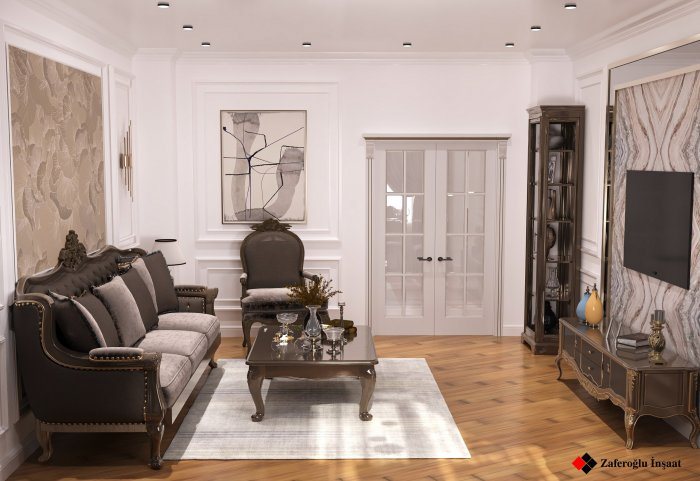
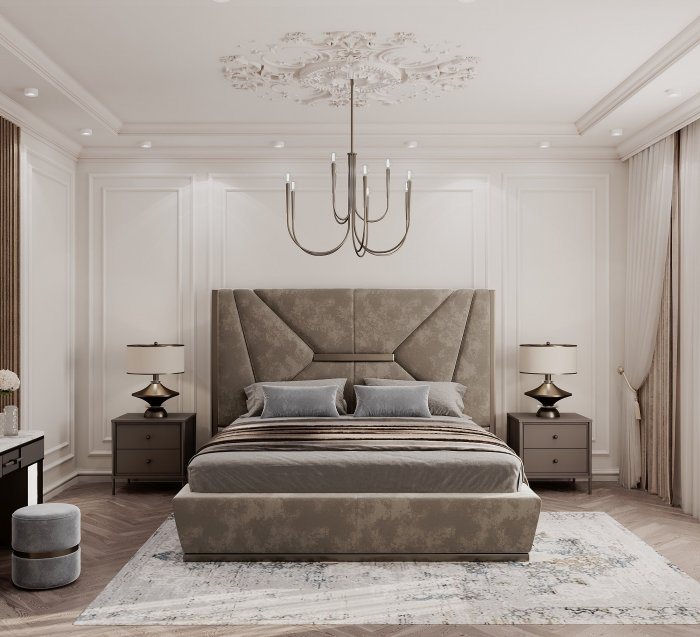
Balance sits at the heart of neoclassicism. A room is organised around an axis: a fireplace, TV wall or window sits in the centre, with paired elements — wall lights, armchairs, consoles — repeated on either side. Symmetry does not mean mirroring everything, but on entering the room the eye should sense a clear order.
The second principle is scale. Decorative details are chosen to match the size of the room: a wide cornice and heavy ceiling rose look oppressive in a low-ceilinged flat, while very slim mouldings get lost in a tall villa hall.
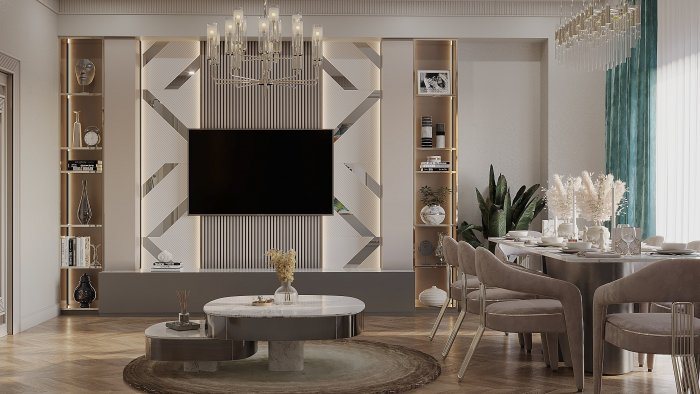
The third principle is making peace with modern life. A neoclassical interior needs room for air conditioning, a large-screen TV, smart-home controls and concealed storage. So that these do not spoil the style, they are planned in advance: the air-conditioning unit goes into a niche behind the cornice, the TV into the centre of a symmetrical panel, and wardrobes behind fronts that follow the same rhythm as the wall panelling. This is what separates neoclassicism from a museum-like classical interior: it is comfortable to live in, and objects are chosen for daily use rather than display.
Wall and ceiling mouldings
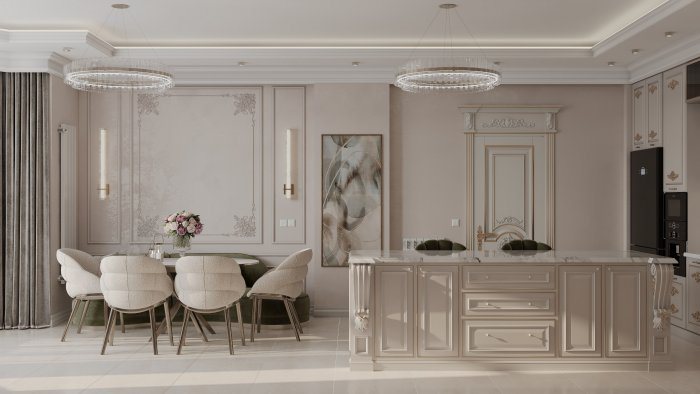
Mouldings are the signature of a neoclassical interior. Rectangular panels are created on the walls, a cornice finishes the junction between wall and ceiling, and a tall skirting board meets the floor. Panel sizes should not be arbitrary: they are aligned with the axes of windows and doors, furniture positions and the length of the wall.
Mouldings are often painted the same colour as the wall. This lets light and shadow reveal the relief without making the interior busy. Contrasting mouldings are a bolder move and only work well against a calm background.
Colour palette
Light, natural tones are typical: ivory, sand, pale grey, beige, soft olive or powder blue. Dark colours are not ruled out — a deep blue or green library wall can be very striking — but the main background is usually light.
Metal accents are used with restraint: bronze, aged brass or a brushed gold tone appears in lamps, door handles and frames. Too many shiny gold surfaces push the style towards full classicism or opulent baroque.
Materials and textures
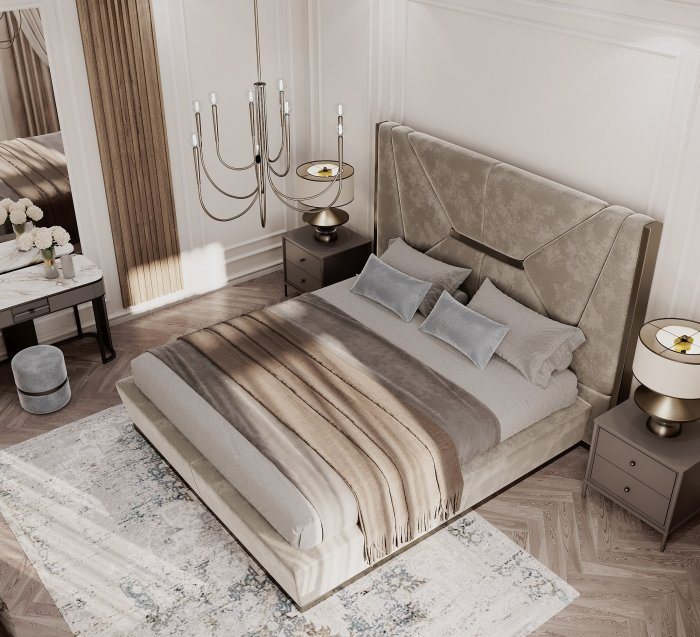
Marble or marble-effect finishes, natural wood, brushed metal and fabrics such as linen, velvet and wool combine well in a neoclassical interior. On the floor, herringbone parquet or large stone-look tiles support the spirit of the style.
It is important to limit the number of textures. When marble, high-gloss lacquer, carved wood, patterned wallpaper and velvet all appear in one room, neoclassical lightness disappears.
A practical approach is to choose one main material (for example, the parquet floor), one noble accent (a marble fireplace surround or console top) and one group of soft fabrics, keeping the remaining surfaces as a calm background. With marble-effect finishes the size and direction of the veining matter too: a tile with very large, sharp veins takes over a small room completely. Placing tile and panel samples side by side and looking at them in both daylight and evening light makes the choice much easier.
Lighting
A central chandelier is often part of the composition in a neoclassical room, but it should not be the only light source. Wall sconces, table lamps and a concealed light line behind the ceiling cornice give the room a soft glow. Hidden lighting emphasises the relief of the mouldings and brings modern comfort into the classical language of the style.
Typical mistakes
- not scaling the decoration to the room and overloading a small space with mouldings;
- random elements that break symmetry: an off-centre pendant, uneven panels;
- confusing neoclassical with classical and adding too much gold and ornament;
- placing electrical points before the moulding panels are planned, so a socket cuts through a panel line.
To avoid the last mistake, wall elevations and the electrical plan should be prepared together.
Zaferoğlu İnşaat prepares sketches and computer models for neoclassical and other interior styles and helps select combinations of materials and colours. A computer model of your own room is the quickest way to see whether neoclassical detailing will feel right there.
News